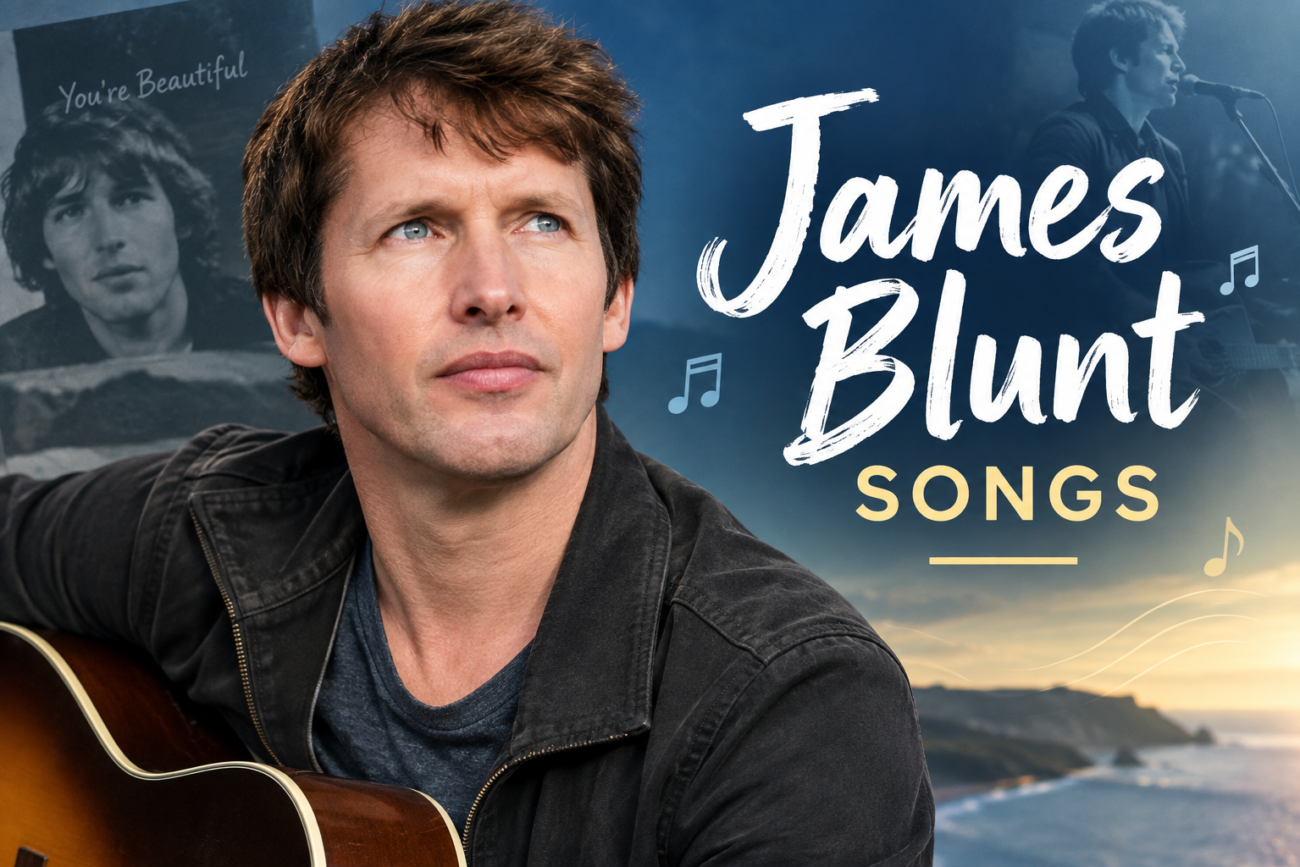
James Blunt has built a distinctive place in modern British pop music with songs that combine emotional storytelling, memorable melodies, and an unmistakably personal vocal style. From the worldwide success of “You’re Beautiful” to reflective tracks such as “Goodbye My Lover,” his catalog covers heartbreak, love, nostalgia, regret, humor, and personal growth.
For listeners searching for the best james blunt songs, choosing where to start can be difficult because his career spans multiple albums and musical eras. Some tracks became major international hits, while others developed a strong following among longtime fans.
This guide highlights 20 standout James Blunt songs, explaining what makes each one worth hearing and where it fits within his broader career.
Key Takeaways
- James Blunt’s catalog blends pop, rock, folk, and singer-songwriter influences.
- “You’re Beautiful” remains his most internationally recognizable song.
- His strongest songs often focus on relationships, memory, loss, and personal reflection.
- Albums such as Back to Bedlam, All the Lost Souls, and Moon Landing contain many of his best-known tracks.
- His later work demonstrates a more playful and varied side of his songwriting.
- The best starting point depends on whether you prefer romantic ballads, upbeat pop, or reflective songs.
Main Article
1. “You’re Beautiful”
“You’re Beautiful” is the obvious starting point for anyone exploring James Blunt’s music. Released as a single from his debut album, Back to Bedlam, it became his signature hit and introduced his songwriting to a worldwide audience.
The song combines a gentle acoustic arrangement with an emotionally direct vocal performance. Its story is deliberately simple, but the ambiguity surrounding the narrator’s encounter gives the track an unusual tension.
For many casual listeners, this is the song that defines James Blunt.
2. “Goodbye My Lover”
“Goodbye My Lover” takes a much more intimate approach to heartbreak. Rather than relying on a large pop production, the song puts the emotional weight on Blunt’s voice and piano-led arrangement.
Its restrained presentation allows the lyrics to remain at the center. The song is particularly effective for listeners looking for reflective music about the end of a relationship.
It also demonstrates why Blunt became associated with emotional ballads early in his career.
3. “1973”
“1973” marked a different side of Blunt’s songwriting. Released from his second studio album, All the Lost Souls, the song has a warmer, more rhythmic sound than some of his earlier ballads.
Its nostalgic atmosphere gives it a sense of looking backward while still feeling like polished contemporary pop. It is a strong choice for listeners who enjoy Blunt’s music but want something more upbeat than “Goodbye My Lover.”
4. “Bonfire Heart”
“Bonfire Heart” is one of Blunt’s most recognizable later-career songs. It appeared on Moon Landing and has a brighter, more energetic character than many of his early hits.
The acoustic-driven arrangement and uplifting chorus make it particularly accessible. The song also shows how Blunt could maintain his storytelling approach while moving toward a more optimistic sound.
For a playlist, it works well as a transition from his emotional ballads to his more energetic material.
5. “Carry You Home”
“Carry You Home” is another emotionally powerful track from All the Lost Souls. The song builds gradually, creating a cinematic feeling without overwhelming the central vocal.
Its themes of separation and loss make it one of the more serious entries in Blunt’s catalog. The restrained beginning and increasingly expansive arrangement help give the song its emotional impact.
6. “Wisemen”
“Wisemen” comes from Back to Bedlam and represents some of the more distinctive songwriting on Blunt’s debut album.
The track has a conversational quality that separates it from straightforward romantic ballads. Its melody, lyrics, and arrangement create a slightly mysterious atmosphere.
Listeners exploring the album beyond its biggest singles should include “Wisemen” near the top of their playlist.
7. “High”
“High” was one of the early songs that helped establish Blunt’s sound. It combines a gentle vocal delivery with an accessible pop arrangement.
The track captures the mixture of vulnerability and melodic simplicity that became an important part of his early work. It is particularly useful for listeners who want to understand how his career developed before “You’re Beautiful” became a global hit.
8. “Stay the Night”
“Stay the Night” presents a considerably more upbeat James Blunt. Released on Some Kind of Trouble, it moves away from the melancholy tone associated with some of his best-known early material.
The song’s energetic production and catchy chorus make it well suited to casual listening and pop playlists.
It is a reminder that Blunt’s catalog is broader than piano ballads and songs about heartbreak.
9. “Heart to Heart”
“Heart to Heart,” from Moon Landing, offers another example of Blunt’s ability to create accessible pop without losing his recognizable songwriting identity.
The song has a warm, polished feel and a chorus designed for easy listening. Compared with some of his more dramatic work, it feels lighter and more straightforward.
It is a good option for listeners who enjoy melodic pop with a romantic theme.
10. “Tears and Rain”
“Tears and Rain” is one of the more introspective songs associated with Back to Bedlam. Its subdued mood and personal tone make it particularly appealing to listeners who prefer the quieter side of Blunt’s music.
The track demonstrates how his early songwriting often balanced pop accessibility with darker emotional themes.
11. “I Came for Love”
“I Came for Love” provides another perspective on Blunt’s songwriting. Rather than depending entirely on sadness, the song emphasizes connection and emotional commitment.
It works well for listeners who want to explore songs beyond the most heavily promoted singles and discover some of the deeper cuts in his catalog.
12. “Stay the Night”
“Stay the Night” is worth highlighting for its upbeat energy and radio-friendly character. Its position in Blunt’s catalog illustrates the stylistic changes he embraced after his earliest releases.
If your playlist needs a James Blunt track that feels energetic rather than melancholy, this is an easy choice.
13. “The Greatest”
“The Greatest” showcases the more mature and reflective side of Blunt’s songwriting. Rather than simply repeating the formula of his early hits, the song demonstrates how his music continued to explore personal themes.
Its appeal comes from the combination of an accessible melody and a thoughtful lyrical perspective.
14. “Postcards”
“Postcards” is one of the more nostalgic entries in Blunt’s catalog. The song captures the feeling of remembering people and places while being separated from them.
Its accessible pop structure makes it easy to enjoy, but the underlying theme gives it additional emotional depth.
15. “Smoke Signals”
“Smoke Signals” is another example of Blunt experimenting with atmosphere and storytelling.
The track is especially interesting for listeners who already know the major singles and want to explore material that reveals more of his songwriting range.
16. “The Girl That Never Was”
“The Girl That Never Was” belongs to the later part of Blunt’s catalog and reflects his continued interest in relationship-centered storytelling.
The song is useful for listeners who want to move beyond his first few albums and understand how his writing evolved over time.
17. “I’ll Take Everything”
“I’ll Take Everything” stands out for its reflective character. The song explores themes of life, ambition, and what ultimately matters, giving it a broader perspective than a conventional love song.
It is a strong choice for listeners who appreciate thoughtful singer-songwriter material.
18. “No Bravery”
“No Bravery” is among the most serious songs associated with Blunt’s early career. Its emotional weight comes partly from his experiences serving as a British Army officer before becoming a full-time musician.
The song has a darker atmosphere than many of his mainstream singles. It provides important context for understanding the depth and seriousness present in parts of his songwriting.
19. “I’ll Be Your Man”
“I’ll Be Your Man” offers a more energetic and confident side of Blunt. Its upbeat character makes it useful for listeners who want something different from the slower songs for which he is often known.
The track demonstrates the range within his pop-oriented material.
20. “Monsters”
“Monsters” is one of the most emotionally affecting songs in Blunt’s later catalog. The track deals with family, aging, and the changing relationship between parent and child.
Its strength comes from its simplicity and sincerity. Instead of relying on elaborate production, the song allows the emotional message to remain central.
For listeners looking for a James Blunt song with a particularly personal feel, “Monsters” deserves attention.
How to Choose the Best James Blunt Songs for Your Playlist
The ideal James Blunt playlist depends on the mood you want to create.
| If you want… | Start with… |
|---|---|
| Romantic pop | “You’re Beautiful” |
| Heartbreak | “Goodbye My Lover” |
| Nostalgia | “1973” |
| Uplifting acoustic pop | “Bonfire Heart” |
| Introspective songwriting | “Tears and Rain” |
| Serious emotional themes | “No Bravery” |
| Family-focused emotion | “Monsters” |
| Upbeat pop | “Stay the Night” |
| A deeper album cut | “Wisemen” |
| A reflective listen | “I’ll Take Everything” |
Which James Blunt Album Should You Start With?
If you are new to James Blunt, Back to Bedlam is the natural starting point. It established his musical identity and contains several of the songs most closely associated with his early career.
After that, All the Lost Souls provides a useful introduction to his second era, including songs such as “1973” and “Carry You Home.”
For a later-career perspective, Moon Landing is particularly useful because it combines emotional songwriting with brighter and more contemporary production.
A simple listening order would be:
- Back to Bedlam
- All the Lost Souls
- Some Kind of Trouble
- Moon Landing
- Later studio albums and releases
This approach lets listeners hear how his sound developed instead of focusing only on individual singles.
What Makes James Blunt’s Songs Stand Out?
Several characteristics repeatedly appear across Blunt’s music.
Emotional Storytelling
His songs often begin with recognizable situations—love, separation, regret, memory, or family—and develop them through personal storytelling.
Strong Melodies
Even when the subject matter is serious, many of his songs have accessible melodies that make them easy to remember.
Contrasting Moods
Blunt’s catalog includes both melancholy ballads and upbeat pop songs. This contrast prevents his discography from feeling one-dimensional.
Distinctive Vocal Style
His voice has a recognizable high, expressive quality that gives his songs an identifiable character.
Personal Perspective
Some of his most powerful material draws from personal experiences and observations, helping give the songs a sense of authenticity.
Are James Blunt’s Songs Mostly Sad?
No. James Blunt is strongly associated with emotional ballads, but his catalog is much broader.
Songs such as “You’re Beautiful,” “Goodbye My Lover,” and “Carry You Home” emphasize emotional or reflective themes, while tracks such as “Stay the Night” and “Bonfire Heart” offer a brighter and more energetic experience.
A complete playlist should therefore include both sides of his music.
Frequently Asked Questions
What is James Blunt’s most famous song?
“You’re Beautiful” is widely regarded as James Blunt’s signature international hit and remains the song most closely associated with his breakthrough.
What are the best James Blunt songs?
Popular choices include “You’re Beautiful,” “Goodbye My Lover,” “1973,” “Bonfire Heart,” “Carry You Home,” “Wisemen,” “No Bravery,” and “Monsters.” The best choice ultimately depends on the listener’s preferred mood.
Which James Blunt album should I listen to first?
Back to Bedlam is the best starting point for most new listeners because it introduced his distinctive style and contains several of his most recognizable songs.
Does James Blunt only make sad songs?
No. Although emotional ballads are an important part of his catalog, he has also released upbeat pop and acoustic-driven songs, including “Stay the Night” and “Bonfire Heart.”
What is James Blunt’s most emotional song?
There is no single objective answer, but “Goodbye My Lover,” “Carry You Home,” and “Monsters” are among the songs listeners often associate with his more emotional material.
Which James Blunt song is good for a romantic playlist?
“You’re Beautiful” is an obvious choice, while “Heart to Heart” offers a lighter romantic feel. The right selection depends on whether you want something intimate or upbeat.
What James Blunt song should a new listener hear first?
“You’re Beautiful” is a natural introduction because it represents the sound that made Blunt internationally famous. After that, listening to “Goodbye My Lover,” “1973,” and “Bonfire Heart” provides a broader picture of his catalog.
Conclusion
James Blunt‘s best songs extend well beyond the handful of singles that made him a household name. His catalog moves between intimate piano ballads, acoustic pop, upbeat radio tracks, nostalgic songwriting, and deeply personal material.
For newcomers, “You’re Beautiful” remains an obvious starting point, but songs such as “Goodbye My Lover,” “1973,” “Bonfire Heart,” “No Bravery,” and “Monsters” reveal different sides of his artistry.
Whether you are building a nostalgic playlist, looking for emotional songwriting, or simply discovering his music for the first time, these james blunt songs provide a strong introduction to one of Britain’s most recognizable singer-songwriters.
