Introduction
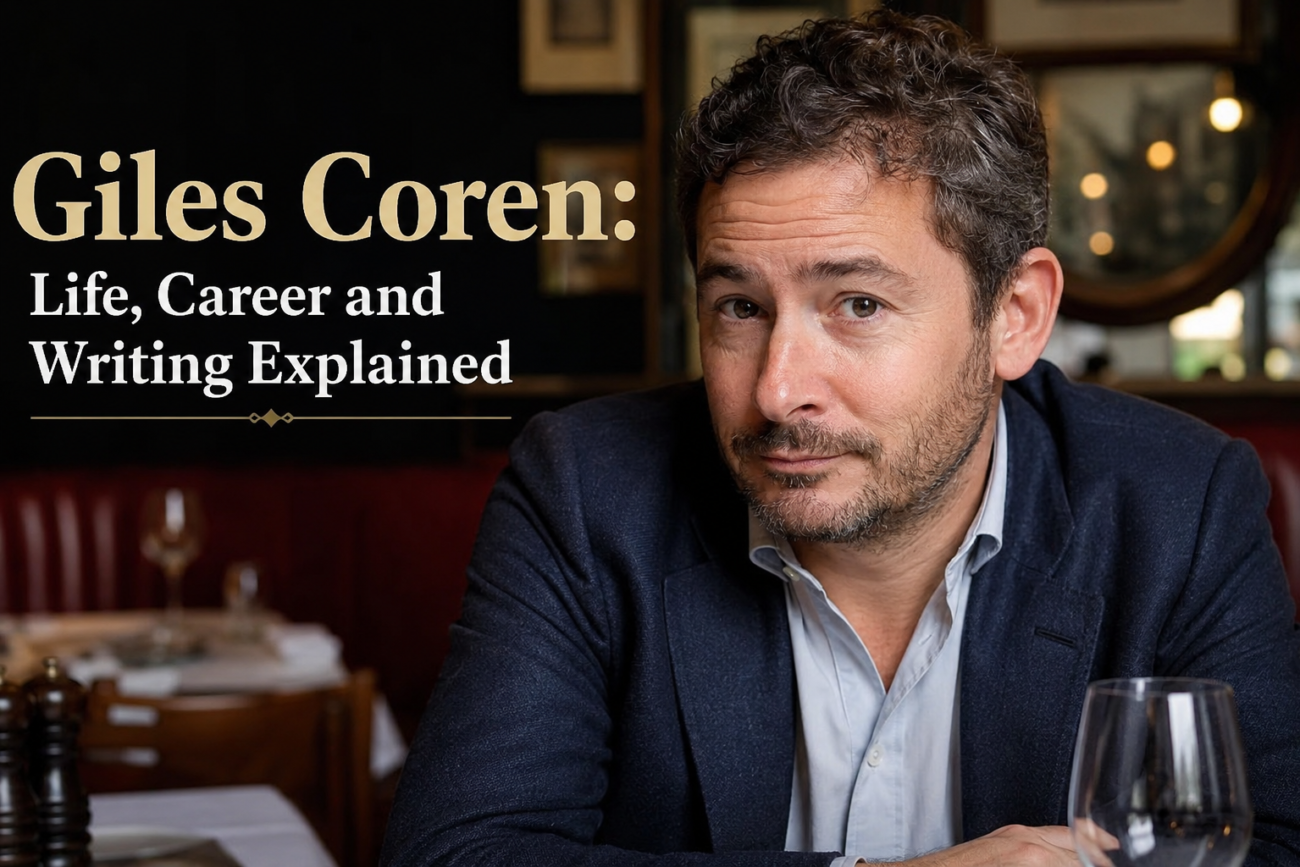
Giles Coren is a British journalist, restaurant critic, columnist, author and television presenter whose career has combined food writing with humour, opinion and popular culture. Best known for his work with The Times, Coren has built a distinctive reputation as a restaurant critic while also writing columns about subjects ranging from everyday life to politics.
His career extends well beyond restaurant reviews. He has written books, appeared on television, contributed to publications including GQ and Time Out, and worked on food-focused programmes that brought his personality and writing style to a wider audience.
This guide explores Giles Coren’s background, education, journalism career, books, television work and achievements, while also explaining why he remains a recognizable figure in British food journalism.
Key Takeaways
- Giles Coren is a British journalist, food writer, restaurant critic and television presenter.
- He was born on July 29, 1969, in Paddington, London.
- He studied English at Keble College, Oxford, and graduated with a first-class degree.
- His journalism career has included work for The Times, Tatler, The Independent on Sunday, GQ and Time Out.
- His books include Winkler, Anger Management (For Beginners) and How To Eat Out.
- He has also presented and appeared in several television programmes focused on food, culture and everyday life.
Biography Table
| Detail | Information |
|---|---|
| Full Name | Giles Robin Patrick Coren |
| Date of Birth | July 29, 1969 |
| Age | 57 as of 2026 |
| Birthplace | Paddington, London, England |
| Nationality | British |
| Profession | Journalist, writer, restaurant critic, columnist and television presenter |
| Education | Westminster School; Keble College, University of Oxford |
| Years Active | 1990s–present |
| Known For | Restaurant criticism, newspaper columns, food writing and television |
| Major Achievements | 2005 Food and Drink Writer of the Year; 2016 Restaurant Writer of the Year |
| Estimated Net Worth | Not reliably established from authoritative public sources |
The basic biographical details above are supported by biographical and publisher sources.
Who Is Giles Coren?
Giles Coren is best known as a British food writer and restaurant critic, but describing him only as a food critic leaves out much of his career.
He has worked as a newspaper columnist, written books, presented television programmes and contributed to several well-known British publications. His writing often combines observations about food with humour, personal experiences and commentary on wider subjects.
His association with The Times has been particularly important to his public profile. He has worked as a restaurant critic for the newspaper and has also written a regular column covering subjects beyond restaurants and food.
This combination of food criticism and general-interest journalism has helped distinguish Coren from writers whose work is limited exclusively to restaurant reviewing.
Early Life and Family Background
Giles Robin Patrick Coren was born on July 29, 1969, in Paddington, London. He is the son of writer and broadcaster Alan Coren and Anne Kasriel. His younger sister is journalist and television personality Victoria Coren Mitchell.
His father, Alan Coren, was a prominent British humourist, writer and broadcaster who edited Punch and became a familiar figure through radio and television. Giles has spoken about the influence his father had on his approach to writing and humour.
That family background is useful context when considering Coren’s own writing career. Humour, observation and the newspaper column have all played significant roles in his professional work.
Education and Early Career
Coren attended Westminster School before studying English at Keble College, University of Oxford. Sources describe him as graduating with a first-class degree in English.
His education in English provided a foundation for a career that would eventually move between journalism, criticism and book writing.
Rather than beginning his career solely as a food specialist, Coren developed as a journalist before becoming particularly associated with restaurant criticism. His early professional work included journalism and restaurant criticism for publications such as Tatler and The Independent on Sunday.
Giles Coren and The Times
One of the defining parts of Giles Coren’s career has been his long association with The Times.
He became known as the newspaper’s restaurant critic while also contributing columns about broader subjects. His writing has covered personal experiences, politics, city life and other topics alongside food.
This dual role helped establish his identity as more than a conventional restaurant reviewer. His work uses restaurants and food as starting points for stories, observations and commentary.
His style has also attracted academic attention. A study published in Journalism Practice examined food criticism and described Coren as a sharp and witty columnist with a tongue-in-cheek approach.
His Approach to Food Writing
Food criticism can easily become technical, particularly when writers concentrate heavily on ingredients, cooking methods and culinary terminology.
Coren has expressed a different philosophy. In an interview about food writing, he emphasized entertainment and storytelling as important elements of restaurant criticism. He argued that a critic’s job is not simply to demonstrate knowledge about food but also to give readers an engaging piece of journalism.
That approach helps explain the distinctive character of his restaurant writing.
Instead of treating a restaurant review as a formal technical assessment alone, his writing can use the meal as a vehicle for:
- Humour
- Personal observation
- Storytelling
- Social commentary
- Descriptions of restaurants and dining experiences
- Opinions about the wider culture surrounding food
For readers, that can make restaurant criticism feel closer to entertainment journalism than a traditional culinary report.
Awards and Recognition
Giles Coren has received recognition for his work as a food and restaurant writer.
In 2005, he was named Food and Drink Writer of the Year at the British Press Awards. In 2016, he was named Restaurant Writer of the Year at the Fortnum & Mason Awards.
These awards are significant because they reflect recognition of his work within British food and journalism circles.
His career has therefore combined longevity with professional recognition, particularly in restaurant and food writing.
Giles Coren’s Books
Coren has also developed a career as an author.
Winkler
Published in 2005, Winkler was Coren’s first novel. It marked a move from newspaper journalism into fiction.
The novel received reviews from publications including The New Statesman and The Independent. One section of the book also became associated with the Literary Review’s Bad Sex in Fiction Award.
Although Coren is primarily associated with journalism and food criticism, Winkler demonstrates his interest in longer-form storytelling.
Anger Management (For Beginners)
Anger Management (For Beginners) was published in 2010 and collected columns originally written for The Times.
The book reflects another important aspect of Coren’s career: his ability to turn newspaper-column writing into a longer collection that showcases his opinions and humour.
How To Eat Out
Published in 2012, How To Eat Out focuses on the experience of dining out and offers Coren’s perspective on restaurants and restaurant culture.
The book’s subject naturally connects with his work as a restaurant critic, making it one of the clearest examples of his food-writing career outside the newspaper environment.
Truth, Love & Clean Cutlery
Coren has also been associated with Truth, Love & Clean Cutlery: A Guide to the Truly Good Restaurants and Food Experiences of the UK, a dining guide focused on restaurants and food experiences.
Giles Coren on Television
Television expanded Coren’s audience beyond newspaper readers.
He became involved with food-related television programming, including The F-Word with Gordon Ramsay. He subsequently presented or appeared in programmes exploring food, history, health and culture.
His television work included:
- The F-Word
- Animal Farm
- Tax the Fat
- The Supersizers Go…
- Our Food
His work with Sue Perkins on The Supersizers Go… was particularly notable because the programme used food to explore different historical periods and lifestyles.
Television suited Coren’s writing persona because his career had already been built around humour, strong opinions and storytelling.
Writing Beyond Food
Although food criticism remains central to his public identity, Coren has written about much more than restaurants.
His Times columns have covered personal life and politics, while his wider journalism has appeared in publications including GQ and Time Out. In 2014, he joined Time Out as a columnist writing about city life.
He has also written under the pseudonym Professor Gideon Garter, producing The Intellectual’s Guide to Fashion for The Sunday Times.
This broader body of work illustrates why Coren is better understood as a general journalist and columnist with a major specialization in food rather than simply as a restaurant critic.
What Makes Giles Coren’s Writing Distinctive?
Several characteristics help explain his lasting profile in British journalism.
Humour
Humour is central to much of Coren’s writing. His columns and food criticism often use comic observations rather than relying solely on formal analysis.
Strong Personal Voice
Restaurant criticism can sometimes sound interchangeable when writers rely heavily on standard culinary descriptions. Coren’s work is more strongly associated with an individual voice and perspective.
Storytelling
His approach treats journalism as storytelling. A restaurant visit can become an opportunity to discuss people, places, behaviour and culture.
Range
His professional work spans food, politics, personal experiences, books, television and city life. That range has allowed him to reach audiences beyond traditional food journalism.
Giles Coren’s Influence on Food Journalism
Coren’s career illustrates how restaurant criticism has evolved from straightforward evaluations of food into a broader form of lifestyle journalism.
Modern restaurant readers often want more than a list of dishes or a technical assessment. They may also want to know what a restaurant feels like, what kind of experience it provides and whether the critic’s perspective makes the story worth reading.
Coren’s career demonstrates the value of personality in this kind of writing. His emphasis on entertainment and storytelling has helped make restaurant criticism part of a wider newspaper and popular-culture conversation.
Frequently Asked Questions
Who is Giles Coren?
Giles Coren is a British journalist, restaurant critic, columnist, author and television presenter. He is particularly well known for his long association with The Times and his work in food journalism.
When was Giles Coren born?
Giles Coren was born on July 29, 1969, in Paddington, London, England.
What is Giles Coren famous for?
He is best known for restaurant criticism and newspaper columns, particularly his work for The Times. He is also recognized for his books and television appearances.
Where did Giles Coren go to university?
He studied English at Keble College, University of Oxford, where he earned a first-class degree.
What books has Giles Coren written?
His books include the novel Winkler, Anger Management (For Beginners) and How To Eat Out. He has also been associated with the dining guide Truth, Love & Clean Cutlery.
Has Giles Coren worked in television?
Yes. He has presented and appeared in several television programmes, including The F-Word, Animal Farm, Tax the Fat, The Supersizers Go… and Our Food.
What awards has Giles Coren won?
Among his professional recognitions, Coren was named Food and Drink Writer of the Year at the 2005 British Press Awards and Restaurant Writer of the Year at the 2016 Fortnum & Mason Awards.
Is Giles Coren still a journalist?
Yes. Recent professional profiles continue to identify him as a critic and columnist associated with The Times, demonstrating that journalism remains an important part of his career.
Conclusion
Giles Coren has built a varied career across British journalism, food criticism, books and television. While his role as a restaurant critic for The Times is central to his public identity, his work extends into general-interest columns, fiction, non-fiction and food-focused television.
His career is particularly notable for the way he combines food criticism with humour, personality and storytelling. Rather than treating restaurant reviewing as purely technical analysis, he has approached it as a form of entertaining journalism.
From his early work in journalism to award-winning food writing, book publishing and television presenting, Giles Coren has developed a distinctive place within British media. His career provides a useful example of how a journalist can build authority in a specialist field while maintaining a much broader presence in popular culture.
