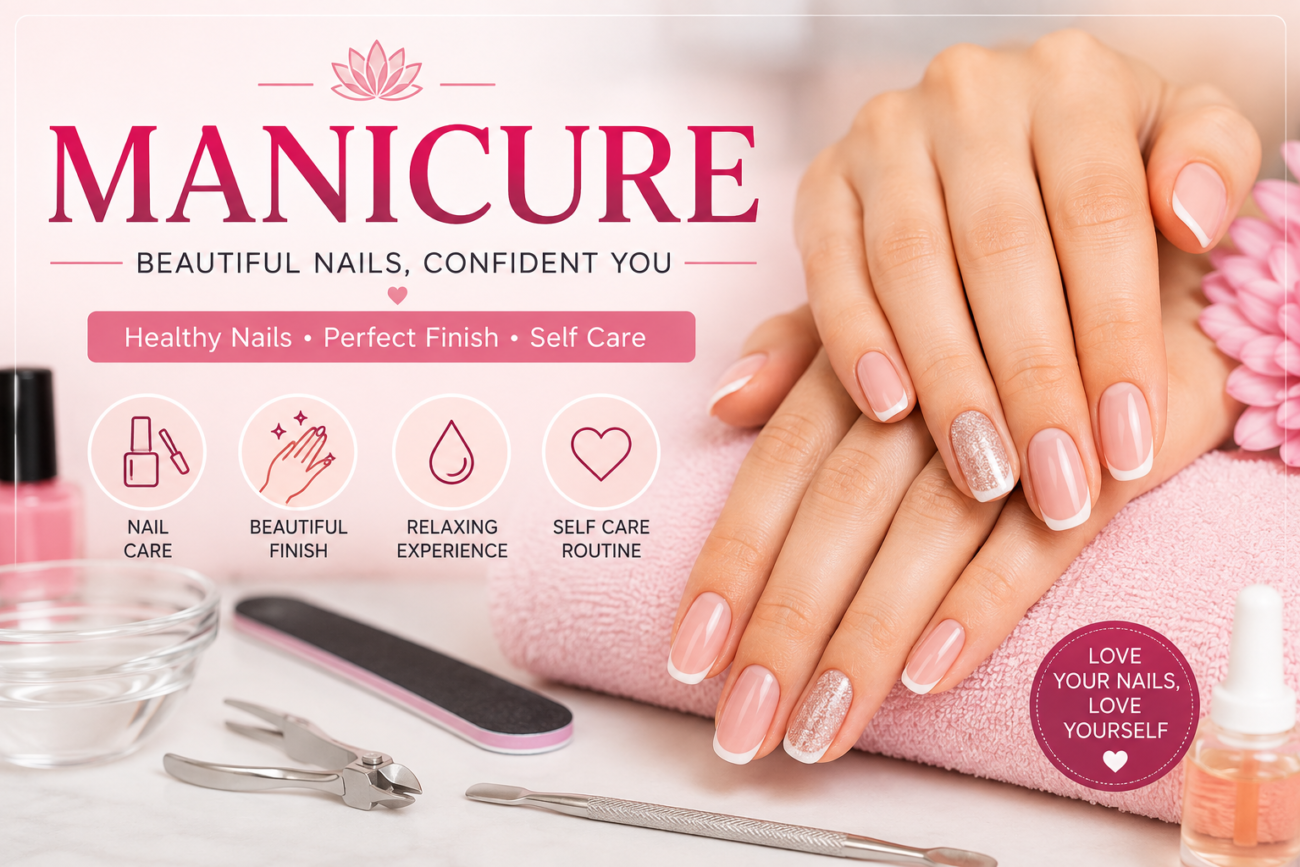
A manicure is more than simply applying nail polish. It is a cosmetic nail-care treatment designed to clean, shape, groom, and improve the appearance of the fingernails and the surrounding skin. Depending on the type, a manicure may include nail trimming, filing, cuticle care, hand exfoliation, moisturizing, and polish or gel application.
For beginners, the number of manicure options can feel confusing. Classic polish, gel, acrylic, dip powder, and other techniques all offer different results, maintenance needs, and levels of durability.
This complete beginner’s guide explains what a manicure involves, the different types available, what happens during an appointment, how to choose the right option, and how to care for your nails afterward.
Key Takeaways
- A manicure is a professional or at-home treatment focused on fingernail and hand care.
- A basic manicure commonly includes cleaning, shaping, cuticle grooming, moisturizing, and polish.
- Gel, acrylic, dip powder, and classic manicures differ in application, durability, and removal.
- Healthy manicure habits include gentle cuticle care and avoiding aggressive filing or picking.
- You can enjoy a manicure at home with a few basic tools and a consistent routine.
- Proper aftercare can help maintain the appearance of your nails and reduce unnecessary damage.
What Is a Manicure?
A manicure is a beauty and grooming treatment for the fingernails, fingertips, and hands. The exact service varies depending on the salon, technician, and manicure type.
A traditional manicure generally involves several basic steps:
- Cleaning the hands and nails
- Removing old polish if necessary
- Trimming or filing the nails
- Shaping the nail edges
- Grooming the cuticles
- Exfoliating the hands when included
- Applying moisturizer or cuticle oil
- Applying nail polish or another nail enhancement
Some manicures are primarily focused on natural nail care, while others use products designed to create longer-lasting color, additional strength, or artificial length.
What Is the Purpose of a Manicure?
The main purpose is to improve nail and hand appearance while providing routine grooming. A manicure can also make it easier to maintain consistent nail length and shape.
However, a manicure should not be considered a medical treatment for nail diseases or injuries. Persistent changes such as significant discoloration, swelling, pain, separation of the nail from the nail bed, or suspected infection are better evaluated by an appropriate healthcare professional.
What Happens During a Manicure?
A typical salon manicure follows a fairly straightforward process, although individual services differ.
1. Nail Preparation
The technician usually begins by cleaning the hands and nails. Existing polish may be removed, and the nails are inspected before preparation begins.
Proper preparation helps create a clean surface for subsequent products.
2. Nail Trimming and Shaping
The nails are shortened if necessary and shaped with a nail file. Popular shapes include:
- Round
- Square
- Squoval
- Oval
- Almond
- Coffin or ballerina
The best shape depends on personal preference, lifestyle, nail length, and the natural shape of the nail.
3. Cuticle Care
The cuticles and surrounding skin are gently groomed. Depending on the service, this may involve softening the cuticle area and carefully pushing back excess cuticle tissue.
Cuticles serve as a protective barrier around the nail. They should not be aggressively cut or damaged simply for cosmetic purposes.
4. Hand Care
Some manicures include hand exfoliation, a massage, or moisturizing treatment.
These steps are mainly cosmetic and can leave the hands feeling smoother and more comfortable.
5. Polish or Nail Enhancement
The final stage depends on the chosen manicure. A traditional service may use a base coat, colored polish, and top coat.
Other services may use gel, acrylic, dip powder, or another nail product.
Popular Types of Manicures
There is no single best manicure for everyone. Different options are suited to different preferences and lifestyles.
| Manicure Type | Main Feature | Typical Benefit |
|---|---|---|
| Classic | Regular nail polish | Simple and easy to change |
| Gel | Gel polish cured with a lamp | Longer-lasting finish |
| Acrylic | Liquid-and-powder enhancement | Length and structure |
| Dip Powder | Powder-based nail coating | Durable decorative finish |
| French | Classic tip design | Timeless appearance |
| Natural Nail | Minimal enhancement | Focus on natural nails |
| At-Home | DIY nail care | Convenient and budget-friendly |
Classic Manicure
A classic manicure is one of the simplest options. It typically involves natural nail preparation followed by regular nail polish.
It is a good choice if you like changing colors frequently or prefer a straightforward service without an enhancement system.
One limitation is that traditional polish generally does not have the same wear characteristics as gel or artificial enhancements.
Gel Manicure
A gel manicure uses gel polish that is cured using a suitable lamp during the application process.
Gel manicures are popular because they can provide a durable, glossy finish. However, proper application and removal matter. Picking or peeling gel polish from the nails can remove layers of the natural nail and leave them weaker or rougher.
Acrylic Manicure
Acrylic enhancements combine a liquid component with a powder to create a hardened nail enhancement. They can be used to add length or create a particular nail shape.
Acrylics require maintenance as the natural nail grows. Removal should be performed carefully rather than forcibly pulling or peeling the enhancement away.
Dip Powder Manicure
Dip powder manicures use a resin or bonding system combined with colored powder. The resulting coating can provide a durable finish without using traditional liquid-and-powder acrylic application.
As with other enhancement systems, removal should be done properly to minimize unnecessary stress on the natural nail.
French Manicure
A French manicure is primarily a nail design rather than a separate nail-enhancement technology. The classic version typically features a natural-looking base with lighter tips.
Modern versions can use different colors, shapes, and finishes while retaining the recognizable tip-based design.
How to Choose the Right Manicure
Choosing a manicure becomes easier when you consider how you use your hands, how long you want the result to last, and how much maintenance you are comfortable with.
Choose Based on Your Lifestyle
If you frequently work with your hands, type, exercise, cook, or perform tasks that place stress on your nails, a practical length and durable finish may be more suitable than very long extensions.
If you enjoy changing your nail color often, regular polish may provide greater flexibility.
Consider Your Natural Nails
Your natural nail condition is another important consideration. If your nails are already thin, peeling, cracked, or damaged, adding length or repeated enhancements may not be the best immediate choice.
A simpler natural-nail manicure can allow you to focus on gentle grooming and maintenance.
Think About Maintenance
Different manicure systems require different levels of upkeep.
Before choosing an enhancement, consider:
- How frequently you want salon appointments
- How quickly your nails grow
- How much you want to spend on maintenance
- Whether you are comfortable with professional removal
- How much nail length you actually need
How Often Should You Get a Manicure?
There is no universal schedule that works for everyone.
Your ideal frequency depends on how quickly your nails grow, the type of manicure you choose, your personal preferences, and the condition of your nails.
Some people schedule regular appointments because they prefer consistently polished nails. Others only get a manicure for special occasions.
The important point is not to treat a calendar schedule as more important than nail condition. If your nails appear damaged or irritated, consider taking a break from enhancements and addressing the underlying issue.
Manicure Safety and Nail Health
A manicure should be enjoyable without unnecessarily damaging the natural nail.
Avoid Aggressive Cuticle Cutting
Cuticles provide protection around the nail area. Excessive cutting can cause irritation and create an opportunity for infection.
Gentle grooming is generally preferable to aggressive removal.
Do Not Pick Off Nail Products
Peeling gel polish, acrylic, or other enhancements from the nail can remove portions of the natural nail surface.
Professional or properly performed removal is preferable to forcibly pulling products away.
Keep Tools Clean
Whether you visit a salon or perform your manicure at home, hygiene matters.
Reusable tools should be appropriately cleaned and disinfected according to their material and intended use. Items that cannot be safely disinfected should not be shared.
Avoid Manicures on Irritated or Infected Nails
If the skin around a nail is visibly inflamed, painful, swollen, or appears infected, cosmetic treatment may make the problem worse or obscure the symptoms.
In such situations, it is sensible to pause cosmetic nail services and seek appropriate professional advice.
How to Do a Manicure at Home
You do not need an elaborate setup for a basic at-home manicure.
Basic Supplies
A simple kit can include:
- Nail clippers
- Nail file
- Cuticle pusher
- Cuticle oil
- Hand moisturizer
- Nail polish remover
- Base coat
- Nail polish
- Top coat
- Clean towel
Simple At-Home Manicure Routine
Step 1: Clean Your Hands and Nails
Wash your hands and remove any existing polish.
Step 2: Shape Your Nails
Trim the nails if needed, then gently file them into your preferred shape.
Step 3: Care for the Cuticle Area
Soften and gently push back the cuticle area rather than aggressively cutting it.
Step 4: Moisturize
Apply cuticle oil and hand moisturizer. Allow excess oil or cream to absorb before applying polish.
Step 5: Apply Base Coat
A base coat can provide a smoother surface for polish and help improve the overall finish.
Step 6: Apply Polish
Apply thin, even layers rather than one thick coat. Allow each layer to dry according to the product instructions.
Step 7: Finish With Top Coat
A top coat can add shine and provide an additional protective layer.
Common Manicure Mistakes to Avoid
Even a simple manicure can cause unnecessary problems when basic care is overlooked.
Filing Back and Forth Too Aggressively
Excessive or rough filing can weaken the free edge of the nail. Use controlled, gentle strokes and avoid unnecessary filing.
Cutting Cuticles Too Deeply
Cutting living tissue around the nail can cause irritation and small injuries.
Leaving Damaged Products on the Nail
If a product has lifted significantly, repeatedly catching on clothing or objects can cause additional stress to the natural nail. Follow the appropriate removal process instead of pulling it off.
Ignoring Nail Changes
Cosmetic products can sometimes make it easier to overlook changes in the nail. Pay attention to persistent abnormalities rather than continually covering them with polish.
How to Make a Manicure Last Longer
Proper preparation and aftercare can help preserve your manicure.
Try these practical habits:
- Avoid using your nails as tools.
- Wear suitable gloves for prolonged household cleaning.
- Apply cuticle oil regularly.
- Moisturize your hands.
- Follow the manufacturer’s instructions for nail products.
- Do not pick or peel polish and enhancements.
- Have artificial enhancements professionally maintained and removed when appropriate.
- Keep your nails at a practical length for your daily activities.
Manicure vs. Pedicure
Although manicures and pedicures share some basic principles, they focus on different areas.
| Feature | Manicure | Pedicure |
|---|---|---|
| Main focus | Fingernails and hands | Toenails and feet |
| Nail shaping | Fingernails | Toenails |
| Skin care | Hands and fingers | Feet |
| Polish | Fingernails | Toenails |
| Common purpose | Hand and nail grooming | Foot and toenail grooming |
A manicure is therefore primarily concerned with the hands and fingernails, while a pedicure focuses on the feet and toenails.
Frequently Asked Questions
Is a manicure good for your nails?
A properly performed manicure can support routine grooming and improve the appearance of your nails. However, aggressive filing, excessive cuticle cutting, improper product removal, or repeated damage can negatively affect natural nails.
How long does a manicure take?
The time varies according to the service. A basic manicure generally takes less time than services involving gel, acrylic, extensions, or detailed nail art.
How long does a manicure last?
Longevity depends on the manicure type, products used, nail growth, daily activities, and aftercare. Regular polish generally requires more frequent touch-ups than many enhancement systems.
Is it better to cut or push back cuticles?
Cuticle care should be gentle. Aggressive cutting can damage the protective tissue around the nail, so many routines focus on softening and carefully pushing back excess cuticle tissue rather than cutting deeply.
Can I get a manicure if my nails are damaged?
It depends on the cause and severity of the damage. If your nails are painful, severely cracked, discolored, separated from the nail bed, or showing signs of infection, it is better to address the problem before cosmetic treatment.
What is the difference between gel and acrylic manicures?
Gel polish is a gel-based coating cured with a suitable lamp, while acrylic enhancements are created from a liquid-and-powder system. Acrylics are commonly used to create additional length and structure.
Can I do a manicure at home?
Yes. A basic manicure can be performed at home with simple tools such as a nail file, clippers, cuticle pusher, moisturizer, and polish. More complex enhancements require additional products and technique.
How can I keep my manicure looking fresh?
Moisturize your hands and cuticles, avoid using your nails as tools, protect your hands during demanding tasks, and avoid picking or peeling nail products. Proper maintenance also helps extend the appearance of many manicure styles.
Conclusion
A manicure is a simple but versatile form of nail and hand care that can range from basic grooming with traditional polish to longer-lasting gel, acrylic, or dip powder enhancements. The right choice depends on your natural nails, lifestyle, preferred appearance, maintenance routine, and budget.
For beginners, starting with a basic manicure is often an easy way to understand nail shaping, cuticle care, polish application, and aftercare before experimenting with more advanced techniques. Whatever style you choose, gentle preparation, hygienic practices, and proper product removal are essential for keeping your natural nails in good condition.
