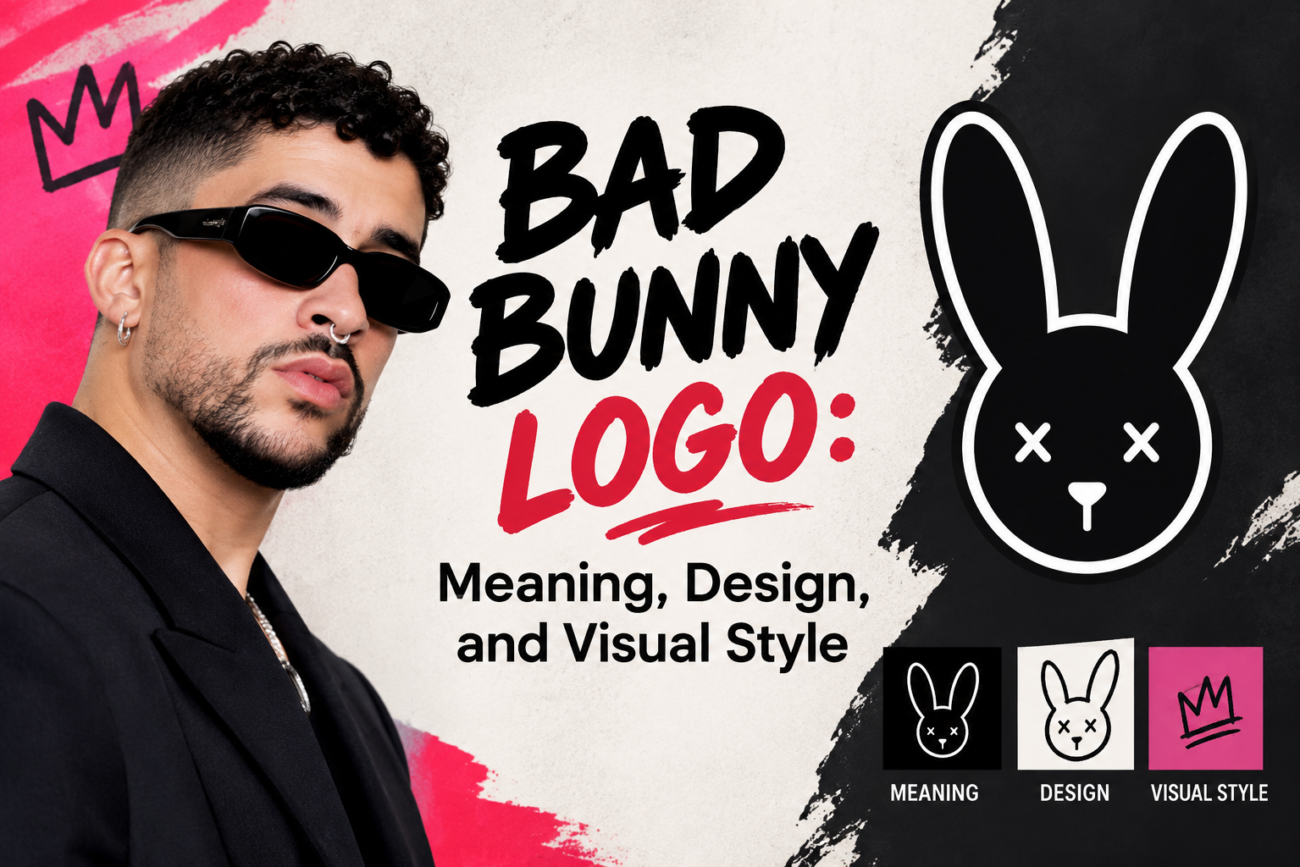
The Bad Bunny logo is an instantly recognizable search topic among fans of the Puerto Rican music star, graphic design enthusiasts, and people looking for distinctive music-inspired artwork. Known for his bold visual identity, experimental fashion, and genre-blending music, Bad Bunny has built a public image that extends far beyond his songs. His branding reflects the creative energy and individuality associated with his career.
However, understanding the Bad Bunny logo requires more than looking at a single graphic. His visual identity includes different wordmarks, album-era artwork, promotional graphics, merchandise designs, and recurring symbols. These elements can vary depending on the project, making it important to distinguish official artwork from fan-made interpretations.
This guide explores the visual style associated with Bad Bunny, the possible meanings behind its design elements, the evolution of his branding, and the different logo formats fans may encounter. It also explains how to recognize official merchandise, find suitable graphic formats, and approach Bad Bunny-inspired designs responsibly.
Key Takeaways
-
The Bad Bunny logo can refer to different wordmarks, symbols, album graphics, and merchandise designs associated with the artist.
-
His visual identity is closely connected to his musical evolution, creative experimentation, and distinctive public image.
-
Typography, contrast, color, and recognizable symbols can all contribute to the appearance of music-related branding.
-
PNG and SVG files serve different purposes when working with logo graphics.
-
Official merchandise and fan-created designs are not necessarily the same, even when they use similar imagery.
-
Anyone using the logo for commercial purposes should consider copyright, trademark, and licensing requirements.
What Is the Bad Bunny Logo?
The Bad Bunny logo refers to the visual marks, lettering, and graphic elements used to identify or represent the artist Benito Antonio Martínez Ocasio, professionally known as Bad Bunny. Rather than relying on one universally consistent design, his visual branding appears across music releases, promotional materials, stage visuals, collaborations, and merchandise.
This distinction matters because a logo associated with a particular album may look very different from artwork used during another stage of his career.
The Difference Between a Logo and Album Artwork
A logo is a recognizable visual identifier, often built around lettering, a symbol, or a combination of both. Album artwork, on the other hand, communicates the mood and creative direction of a particular musical project.
For Bad Bunny, these categories can overlap. A stylized title or graphic from an album may become recognizable to fans even if it is not a permanent logo used across all releases.
When searching for a particular design, consider whether you want:
-
The artist’s name in a distinctive typographic treatment.
-
A graphic associated with a specific album.
-
Artwork from a tour or promotional campaign.
-
A symbol featured on clothing or other merchandise.
-
A fan-created interpretation inspired by his visual style.
Identifying the intended design first makes it easier to find the right image or graphic file.
Bad Bunny Logo Meaning: What Does It Represent?
The meaning of a Bad Bunny logo depends on the specific design and the project for which it was created. It would be inaccurate to assign one definitive meaning to every symbol, font, or image associated with the artist.
However, several broader themes help explain why his visual identity attracts so much attention.
Individuality and Creative Expression
Bad Bunny is known for experimenting with music, fashion, and presentation. His public image challenges conventional expectations about how a Latin music superstar should look or behave.
That willingness to experiment is also relevant when interpreting his branding. Unexpected typography, contrasting colors, unconventional illustrations, and playful visual details can help communicate individuality.
Puerto Rican Identity and Cultural Influence
Bad Bunny’s music and public projects frequently engage with Puerto Rican identity and Caribbean musical traditions. Some visual campaigns also draw attention to local settings, cultural references, and familiar aspects of everyday life.
Not every logo carries a direct cultural message, however. The meaning of a particular image should be understood in the context of the album, campaign, or merchandise collection where it appears.
Music, Fashion, and Pop Culture
A recognizable graphic can connect a song, album, or tour to a wider fan experience. When a design appears on clothing, posters, or accessories, it can become part of how listeners express their connection to an artist.
This relationship between music and fashion helps explain why searches for Bad Bunny logo designs often include terms such as shirts, hoodies, wallpapers, tattoos, and stickers.
Key Design Elements of the Bad Bunny Visual Identity
There is no single checklist that describes every Bad Bunny graphic. Nevertheless, several design principles are useful when examining his branding.
Typography and Lettering
Typography plays an important role in music branding because lettering can communicate a project’s personality before someone hears a song.
Depending on the release, lettering may appear bold, handwritten, condensed, playful, retro-inspired, or deliberately unconventional.
When studying a specific Bad Bunny logo, look at:
-
Letter shape: Are the characters rounded, angular, narrow, or wide?
-
Weight: Do the letters appear light, medium, or heavy?
-
Spacing: Are the characters tightly grouped or widely separated?
-
Arrangement: Is the text presented in one line, several lines, or an unusual composition?
-
Legibility: Can viewers recognize the name at smaller sizes?
These details are particularly useful for graphic designers who want to understand the visual approach without simply copying an existing design.
Color and Contrast
Color can change the mood of a graphic considerably. Dark backgrounds may create a dramatic appearance, while brighter colors can communicate energy, playfulness, or a summery atmosphere.
Bad Bunny’s visual campaigns have varied from one project to another, so there is no single color palette that should automatically be treated as his permanent brand palette.
For personal artwork inspired by his music, choose colors that match the particular album or era you have in mind. Always check the original reference before describing a particular color combination as official.
Symbols and Illustrations
Some artist-related graphics use illustrations, icons, or recurring visual motifs rather than relying entirely on a wordmark.
Fans may associate a symbol with a particular song, album, or merchandise collection. However, a symbol appearing in one design should not automatically be considered an official, permanent Bad Bunny logo.
The most reliable way to interpret an individual graphic is to examine its original context.
How the Bad Bunny Logo Has Changed Across Album Eras
Bad Bunny’s career includes multiple musical eras, each with its own artistic direction. Album covers, campaign graphics, and merchandise designs help distinguish these periods.
The following overview highlights several notable releases and their broader visual associations. It is not a definitive catalog of official logos.
| Album or era | Release year | Visual context |
|---|---|---|
| X 100PRE | 2018 | Early solo-era identity and experimental urban music imagery |
| YHLQMDLG | 2020 | A distinct album identity associated with energetic, genre-blending music |
| El Último Tour del Mundo | 2020 | A separate visual direction for a more introspective project |
| Un Verano Sin Ti | 2022 | Summer imagery and a tropical, beach-oriented atmosphere |
| Nadie Sabe Lo Que Va a Pasar Mañana | 2023 | A different visual identity associated with the album’s release |
| DeBÍ TiRAR MáS FOToS | 2025 | Artwork and promotional imagery connected with Puerto Rican culture and nostalgia |
These projects illustrate why a search for the Bad Bunny logo can return several different results. Each release can establish a distinctive visual language without replacing every other graphic associated with the artist.
Why Album-Era Designs Matter
Album-specific branding gives fans a way to recognize a particular period in an artist’s career.
Someone looking for a graphic from Un Verano Sin Ti, for example, may want the artwork associated with that release rather than a general Bad Bunny wordmark. A fan interested in DeBÍ TiRAR MáS FOToS may be looking for its specific title treatment or related merchandise.
Including the album name in your search can therefore produce more relevant results than searching for the artist’s name alone.
Bad Bunny Logo PNG vs. SVG: Which Format Is Better?
The file format matters when you want to use a logo for a profile graphic, digital design, poster, or other creative project.
Two common formats are PNG and SVG. They serve different purposes.
| Feature | PNG | SVG |
|---|---|---|
| File type | Raster image | Vector graphic |
| Transparency | Supported | Supported |
| Resizing | Can become pixelated when enlarged | Usually remains sharp at different sizes |
| Best uses | Digital graphics and image editing | Scalable logos and vector design |
| Editing | Pixel-based editing | Vector editing when the file contains editable elements |
| Compatibility | Supported by most image viewers | Supported by modern browsers and many design tools |
When to Choose a PNG File
A PNG file is useful when you need an image with a transparent background. It can work well for a personal digital collage, a presentation, or a graphic that will appear on a website.
Check the image dimensions before using it. A small PNG may look clear on a phone but appear blurry when enlarged for a large poster.
Transparency also does not guarantee that an image is high quality. Some files contain unwanted white backgrounds, rough edges, or compression artifacts.
When to Choose an SVG File
An SVG file stores graphics using vector-based instructions rather than a fixed grid of pixels. This makes it useful for logos that need to scale across different dimensions.
SVG files can be opened in compatible vector-design applications. However, some files contain embedded images or other elements that limit how easily they can be edited.
Always inspect the file before assuming that every part of the graphic is editable.
What About JPG Files?
JPG is another common image format, particularly for photographs and complex artwork. It is less suitable when you need a transparent background because standard JPG images do not support transparency.
For a photograph of Bad Bunny, JPG may be appropriate. For an isolated logo on a transparent background, PNG or SVG is generally a better starting point.
How to Find a High-Quality Bad Bunny Logo
Finding the right graphic begins with identifying exactly what you need.
Follow these steps to narrow your search:
-
Choose the design. Decide whether you want a general wordmark, album artwork, tour graphic, or merchandise design.
-
Add a descriptive search term. Try phrases such as “Bad Bunny logo PNG transparent” or “Bad Bunny album logo SVG.”
-
Identify the original context. Look for the artwork in official promotional material or reputable sources that identify the release.
-
Check image quality. Inspect dimensions, sharpness, transparency, and visible artifacts.
-
Review usage permissions. Confirm whether the graphic can be used for your intended purpose.
A transparent image is not necessarily an official image, and an image found online is not automatically free for commercial use.
If authenticity matters, compare the graphic with artwork released for the relevant album, tour, or official merchandise collection.
Bad Bunny Logo Merchandise and Personal Design Ideas
The popularity of artist-related graphics extends into clothing, accessories, posters, and personal projects. However, it is important to distinguish officially licensed products from independently created merchandise.
Clothing and Accessories
Bad Bunny-related designs may appear on T-shirts, hoodies, hats, bags, and other items. The artwork can vary by album, collaboration, or collection.
Before buying merchandise, check the seller’s reputation, product photographs, return policy, and any information about licensing or official distribution.
A product featuring an artist’s name or a familiar symbol is not necessarily authorized merchandise.
Wallpapers and Digital Graphics
Fans may also look for Bad Bunny wallpapers for phones, tablets, or computers.
For the best result, select an image with dimensions appropriate for your screen. A portrait-oriented image may suit a phone, while a wide composition generally works better for a desktop display.
Keep important text and visual elements away from areas that may be covered by icons, clocks, or other interface elements.
Tattoo Inspiration
A Bad Bunny-inspired tattoo might reference a song, an album, a memorable image, or a personal connection to his music.
Before choosing a design, consider its size, placement, long-term readability, and whether it relies on fine details that may become less distinct over time.
If you plan to reproduce an existing logo or protected graphic, discuss the design with your tattoo artist and consider the relevant rights. A custom interpretation can also help you create something more personal.
Can You Use the Bad Bunny Logo for Your Own Project?
The answer depends on the design, the intended use, and the applicable laws.
A graphic may contain protected artwork, trademarks, copyrighted illustrations, or other elements belonging to different rights holders. The fact that an image is easy to download does not establish permission to reproduce it.
Personal and Noncommercial Projects
People often create fan art, wallpapers, personal collages, and other projects inspired by musicians.
Personal use may present different legal considerations from commercial distribution, but it is not automatically exempt from copyright or trademark rules in every jurisdiction.
Commercial Projects
Using an artist’s name, logo, or album artwork to sell products can create additional legal risks.
Before using a graphic on merchandise, advertisements, packaging, or business materials, consider whether you need permission or a license. Avoid presenting unofficial products as endorsed by the artist.
Creating an Original Inspired Design
If you are designing your own music-inspired artwork, focus on general creative principles rather than reproducing a protected graphic.
You can experiment with typography, composition, color contrast, and illustration techniques while developing an original concept. Do not assume that changing a few colors or altering a small detail automatically makes a copied design legally safe.
When commercial rights are important, seek advice appropriate to your jurisdiction and intended use.
Frequently Asked Questions
1. What does the Bad Bunny logo look like?
There is no single design that represents every Bad Bunny release. The term can refer to wordmarks, album-specific lettering, promotional graphics, and symbols used in merchandise.
2. What does the Bad Bunny logo mean?
Its meaning depends on the particular graphic. Some designs identify a musical project or campaign, while others communicate a specific visual theme. Not every symbol has a publicly confirmed interpretation.
3. Where can I find a Bad Bunny logo PNG?
Search for the specific design you want, using terms such as “Bad Bunny logo PNG transparent.” Check the original source, image quality, and permitted uses before downloading or publishing it.
4. Is there an official Bad Bunny logo SVG?
SVG files may be available for certain graphics, including album-related designs. However, the availability of an SVG does not establish that it is an official, editable, or commercially authorized file.
5. Why does the Bad Bunny logo look different across albums?
His music releases use different artwork and promotional styles. Album-specific graphics help establish the identity of each project, so they should not all be treated as versions of one permanent logo.
6. Can I use the Bad Bunny logo on a T-shirt?
Commercial use may require authorization or a suitable license, depending on the artwork and applicable law. Do not assume that a downloaded image is free to reproduce on products for sale.
7. What is the difference between a Bad Bunny logo and album cover art?
A logo primarily identifies an artist, release, or brand, while album cover art represents a musical project through a broader visual composition. The two can overlap when lettering or symbols from the cover become recognizable.
8. How can I make a Bad Bunny-inspired logo?
Start by identifying the creative qualities you like, such as bold lettering, unusual spacing, or a particular color mood. Develop an original composition rather than copying existing artwork, especially if you intend to use the result commercially.
Conclusion
The Bad Bunny logo is best understood as part of a broader visual identity that spans music releases, promotional campaigns, fashion, and fan culture. Different album eras have introduced distinct artwork and graphic styles, which explains why searches can produce a variety of designs rather than one universally consistent logo.
Whether you are researching its meaning, looking for a PNG or SVG file, choosing a wallpaper, or exploring merchandise, the most useful first step is to identify the specific design you want. Checking its original context helps you understand what it represents and whether it is authentic.
For designers and fans alike, Bad Bunny’s visual identity offers an opportunity to explore the relationship between music, typography, cultural expression, and personal style. By approaching the artwork thoughtfully and respecting relevant usage rights, you can appreciate its creative influence while making informed decisions about how to use it.
