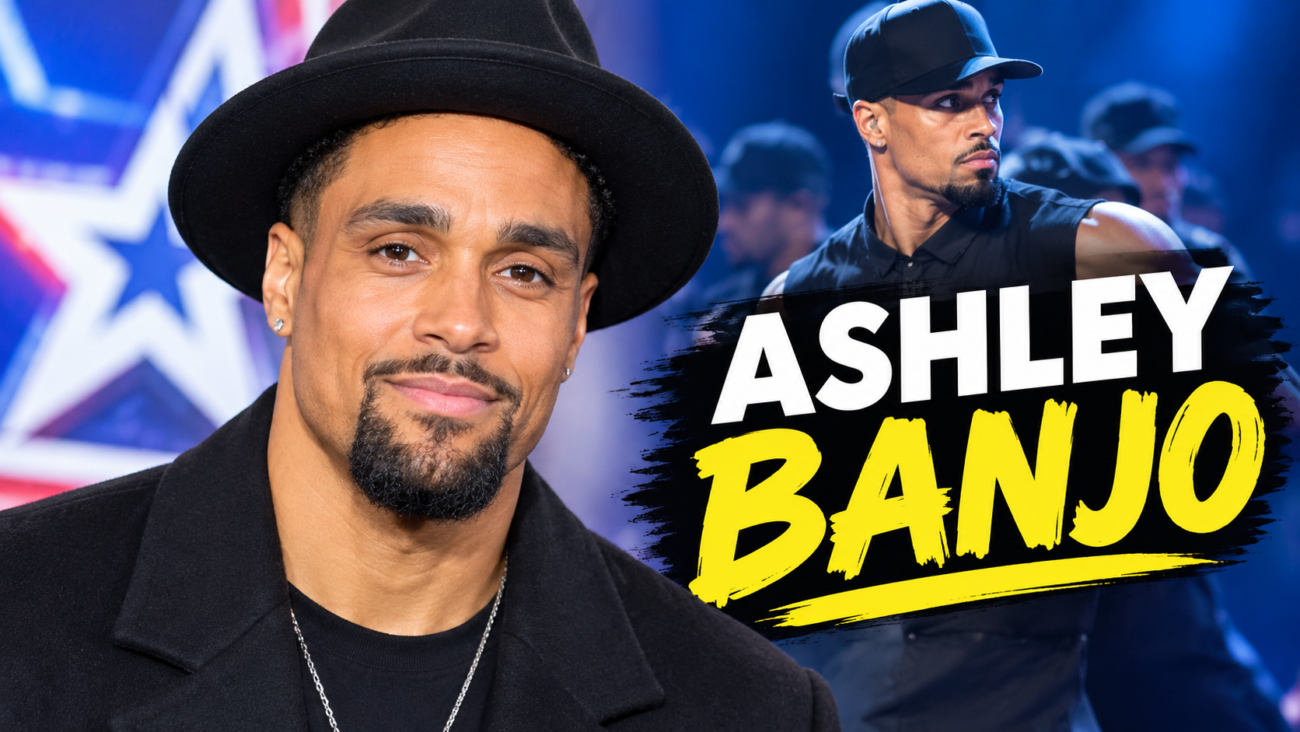
Ashley Banjo is one of the most recognisable figures to emerge from the British dance scene over the past two decades. Best known as the leader and choreographer of Diversity, he became a household name after the group won Britain’s Got Talent in 2009. Since then, his career has expanded well beyond competitive dance, taking in choreography, television presenting, judging, acting and documentary work.
Born in Leytonstone, London, in 1988 and raised in Essex, Banjo grew up surrounded by both dance and sport. His mother, Danielle, was a dance teacher, while his father, Funso Banjo, was a heavyweight boxer. That unusual combination of influences helped shape a performer who could combine athletic movement with carefully structured choreography.
But who is Ashley Banjo beyond the television appearances? His story includes academic ambitions, the rapid rise of Diversity, major television opportunities and a growing role in conversations about representation and racism in Britain. This article explores his background, career and most important achievements.
Key Takeaways
- Ashley Banjo is an English dancer, choreographer and television personality.
- He was born on 4 October 1988 in Leytonstone, London.
- He became famous as the leader and choreographer of Diversity, which won Britain’s Got Talent in 2009.
- His television career has included Got to Dance, Dance Dance Dance, Dancing on Ice, Can’t Touch This and Flirty Dancing.
- He studied science at university before leaving his degree when Diversity’s success transformed his career.
- Banjo was appointed an MBE in the 2022 New Year Honours for services to dance.
Biography Table
| Detail | Information |
|---|---|
| Full Name | Ashley Modurotolu Banjo |
| Date of Birth | 4 October 1988 |
| Age | 37 years old as of September 2026 |
| Birthplace | Leytonstone, London, England |
| Nationality | British |
| Profession | Dancer, choreographer, television personality and actor |
| Education | St John’s School, Billericay; Seevic College; Queen Mary University of London |
| Years Active | 2009–present |
| Known For | Diversity, Britain’s Got Talent, Got to Dance, Dancing on Ice |
| Major Achievements | Britain’s Got Talent winner with Diversity; MBE for services to dance |
| Estimated Net Worth | Not included because reliable public figures are unavailable |
Who Is Ashley Banjo?
Ashley Banjo is a British street dancer and choreographer who rose to national prominence as the leader of Diversity. The dance group won the third series of Britain’s Got Talent in 2009, defeating a field that included the hugely popular singer Susan Boyle.
The victory became a major turning point. Diversity went from performing as a young dance group to touring major venues, while Banjo developed opportunities as a choreographer, presenter and television judge.
His career is notable because he did not remain confined to one area of entertainment. Instead, he used his experience as a dancer to build a wider television career.
Ashley Banjo’s Early Life and Family Background
Ashley Banjo was born in Leytonstone, east London, and grew up in Essex. Dance was part of his life from an early age because his mother, Danielle, worked as a dance teacher. His father, Funso, was a heavyweight boxer.
Growing up around his mother’s dance studio gave Banjo an unusually early introduction to performance. He learned different forms of dance, including ballet, tap and jazz, before developing a strong interest in street dance.
His family background also influenced his approach to discipline and performance. His father’s sporting career provided a strong example of physical training, while his mother’s work gave him a foundation in dance technique.
Banjo has also spoken about the contrast between his academic life and his dancing. At school in Billericay, he was academically successful and became head boy. He later went to university to study science.
Ashley Banjo’s Education and Interest in Science
One of the less obvious aspects of Ashley Banjo’s background is his interest in science.
He attended St John’s School in Billericay and later studied at Queen Mary University of London. In 2009, Queen Mary described him as a science student studying physics when Diversity won Britain’s Got Talent.
Banjo eventually left university before completing his degree because Diversity’s success created a full-time professional career in dance. He has explained that he wanted to return to his studies one day, although his entertainment career continued to grow.
His scientific interests have also influenced the way he thinks about choreography. Rather than treating dance purely as spontaneous movement, he has described the creative process as something involving structure, logic and experimentation.
How Diversity Changed Ashley Banjo’s Career
Diversity was the breakthrough that transformed Ashley Banjo from a talented young dancer into a national celebrity.
The group was formed in the East London and Essex dance scene and developed its distinctive combination of street dance, choreography, storytelling and theatrical performance. Banjo became its lead performer and choreographer.
Their biggest moment arrived in 2009 when Diversity won Britain’s Got Talent. The victory was particularly notable because Susan Boyle had become one of the show’s biggest pre-final favourites.
The win created opportunities for Diversity to perform across the country and internationally. ITV later reported that the group had completed nine UK arena tours and sold more than 800,000 tickets by 2020.
For Banjo personally, the victory also established him as a choreographer capable of creating large-scale performances rather than simply appearing as a dancer.
Ashley Banjo’s Television Career
After Britain’s Got Talent, Banjo became increasingly familiar to television audiences.
Got to Dance
One of his major early television roles was as a judge on Sky1’s Got to Dance. He appeared across the show’s five series, assessing dancers and helping introduce emerging performers to a national audience.
The role was a natural extension of his experience. Having competed successfully at a major televised talent competition, Banjo could offer contestants insight from the perspective of a professional dancer.
Dance Dance Dance
In 2017, Banjo joined the judging panel of ITV’s Dance Dance Dance. The series brought together celebrities and professional dancers in performances inspired by well-known music videos and stage productions.
Dancing on Ice
Banjo also became a familiar face on Dancing on Ice, joining the judging panel in 2018. His involvement brought his dance and performance expertise into a competition based around skating.
His judging career demonstrated how his professional experience could translate into television roles beyond traditional dance competitions.
Can’t Touch This and Other Presenting Work
Banjo has also worked as a television presenter. In 2016, he co-presented the BBC One entertainment show Can’t Touch This with Zoe Ball. He has also been associated with programmes including Flirty Dancing.
These roles helped establish him as a broader television personality rather than someone known only for dance.
Ashley Banjo and Britain’s Got Talent
Britain’s Got Talent remains the defining milestone in Ashley Banjo’s career.
His relationship with the programme later came full circle when he temporarily joined the judging panel in 2020. He stepped in for Simon Cowell during the live semi-finals and final after Cowell was injured in an electric-bike accident.
The opportunity was significant because Banjo was returning to the same stage where he had first become famous more than a decade earlier.
It also showed how dramatically his professional position had changed. In 2009, he was a young contestant hoping to win. In 2020, he returned as an experienced choreographer and television personality evaluating other performers.
Ashley Banjo’s Work Beyond Dance
Although dance remains central to his career, Banjo has also taken on projects dealing with wider social issues.
He and Diversity received considerable attention after their 2020 Britain’s Got Talent performance addressed the death of George Floyd and racism. The performance generated significant public debate and thousands of complaints to Ofcom.
Banjo subsequently became involved in television projects exploring racism and representation in Britain. His work in this area added another dimension to his public profile, moving beyond entertainment into social commentary.
He has also supported charitable projects. The National Diversity Awards highlighted his involvement with The Real Full Monty and his support for organisations helping young people.
Ashley Banjo’s MBE Honour
In the 2022 New Year Honours, Ashley Banjo was appointed a Member of the Order of the British Empire (MBE) for services to dance.
The honour recognised his contribution to British dance and entertainment. It also reflected how far his career had developed since Diversity’s Britain’s Got Talent victory in 2009.
For Banjo, the recognition represented a significant achievement beyond television ratings or competition trophies. His career had helped bring street dance into mainstream British entertainment while creating opportunities for younger performers.
What Makes Ashley Banjo’s Career Significant?
Ashley Banjo’s career stands out because of its range.
He has worked as:
- A professional street dancer
- A choreographer
- A dance-group leader
- A television judge
- A presenter
- An actor
- A producer
- A documentary contributor
His career also illustrates how a successful talent-show appearance can develop into a much broader entertainment profession when combined with creative and business skills.
Diversity’s success gave Banjo a platform, but his continued presence in television demonstrates his ability to adapt to different roles and audiences.
Frequently Asked Questions
How old is Ashley Banjo?
Ashley Banjo was born on 4 October 1988. He is 37 years old as of September 2026.
What is Ashley Banjo famous for?
Ashley Banjo is best known as the leader and choreographer of Diversity, the dance group that won Britain’s Got Talent in 2009. He later became a television presenter and judge.
Where was Ashley Banjo born?
Ashley Banjo was born in Leytonstone, London, England, and grew up in Essex.
Is Ashley Banjo a professional dancer?
Yes. Ashley Banjo is a professional street dancer and choreographer. His work with Diversity has been central to his career since the group’s rise to fame.
Did Ashley Banjo go to university?
Yes. Banjo studied science at Queen Mary University of London. He left his degree before completing it after Diversity’s success on Britain’s Got Talent created major professional opportunities.
What is Diversity known for?
Diversity is known for its large-scale street-dance performances and for winning Britain’s Got Talent in 2009. The group was led and choreographed by Ashley Banjo.
Has Ashley Banjo received an award?
Yes. Ashley Banjo was appointed an MBE in the 2022 New Year Honours for services to dance.
Conclusion
Ashley Banjo‘s career is a story of how dance can become the foundation for a much wider creative career. From growing up around his mother’s dance studio to leading Diversity to victory on Britain’s Got Talent, he has consistently expanded his role within British entertainment.
His work has taken him from performing and choreography into judging, presenting, acting and socially focused television projects. His MBE recognition further reflects his contribution to dance and his influence within the British entertainment industry.
For anyone searching for Ashley Banjo, the most important part of his story is not simply his 2009 breakthrough. It is the career he built afterward. Diversity opened the door, but his versatility as a performer, choreographer, presenter and television personality has kept him relevant for well over a decade.
Would you like a shorter version tailored for a news site or a more detailed biography for a general audience?
