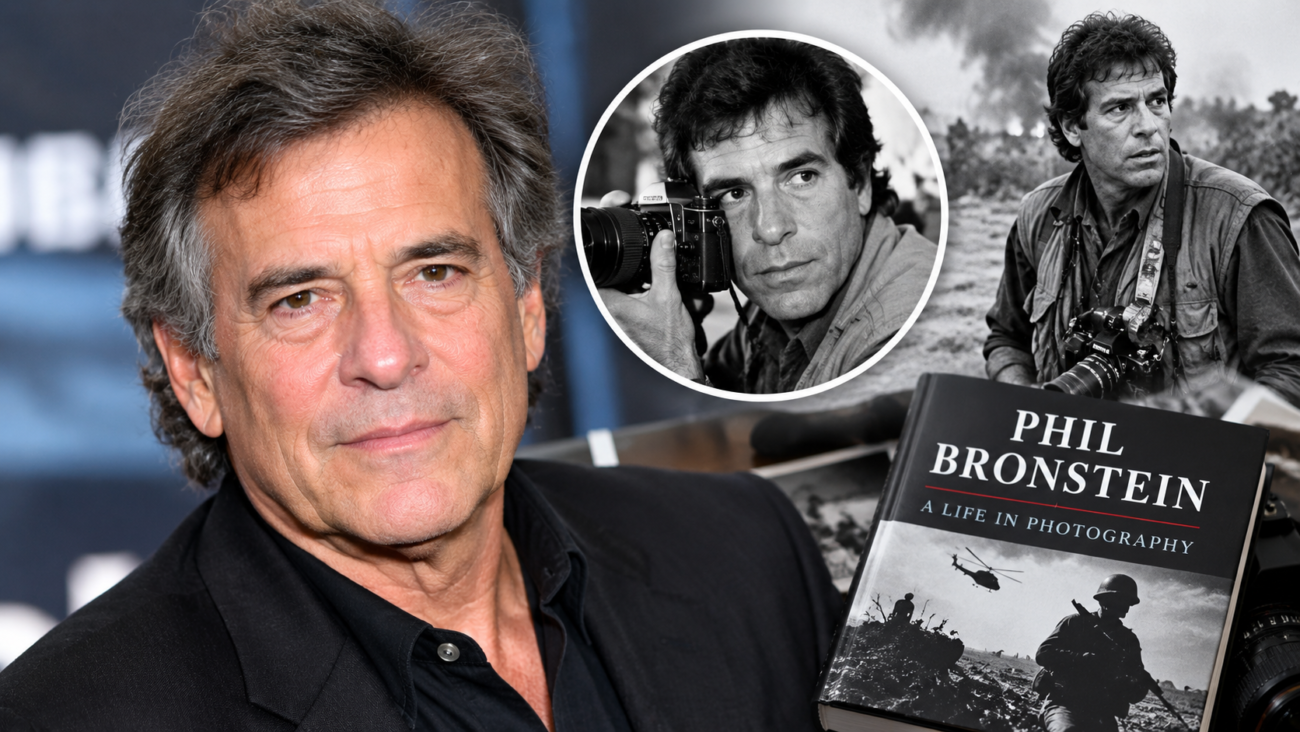
Phil Bronstein is an American journalist and editor whose career has been closely associated with major Bay Area newspapers and investigative journalism. Born in Atlanta, Georgia, in 1950, Bronstein developed a reputation as a reporter, foreign correspondent, newsroom leader, and advocate for investigative journalism.
Over more than three decades in journalism, Bronstein worked at the San Francisco Examiner and San Francisco Chronicle, covering international conflicts before moving into senior editorial positions. His reporting on the fall of Philippine dictator Ferdinand Marcos earned him recognition as a 1986 Pulitzer Prize finalist.
His public profile also expanded beyond journalism because of his marriage to actress Sharon Stone. However, his professional record extends well beyond that relationship, particularly his work in investigative reporting, newspaper leadership, and nonprofit journalism.
This guide explores Phil Bronstein’s biography, career, education, achievements, family background, and personal life.
Key Takeaways
- Phil Bronstein was born on October 4, 1950, in Atlanta, Georgia.
- He built his journalism career primarily in the San Francisco Bay Area.
- He spent decades with the San Francisco Examiner and San Francisco Chronicle.
- His international reporting on the Philippines in 1986 was a Pulitzer Prize finalist.
- Bronstein later became involved with the Center for Investigative Reporting.
- He was married to actress Sharon Stone from 1998 until their divorce in 2004.
Biography Table
| Detail | Information |
|---|---|
| Full Name | Phil Bronstein |
| Date of Birth | October 4, 1950 |
| Age | 75 as of September 2026 |
| Birthplace | Atlanta, Georgia, United States |
| Nationality | American |
| Profession | Journalist, editor |
| Education | Attended the University of California, Davis; did not graduate |
| Years Active | Primarily from the 1970s onward |
| Known For | Journalism, foreign correspondence, newspaper editing |
| Major Achievements | 1986 Pulitzer Prize finalist; senior editorial roles at major San Francisco newspapers |
| Estimated Net Worth | Reliable public figures are not established |
Main Article
Who Is Phil Bronstein?
Phil Bronstein is an American journalist and editor best known for his leadership roles at the San Francisco Examiner and San Francisco Chronicle. His career included investigative reporting, foreign correspondence, newspaper editing, and work supporting nonprofit journalism.
Bronstein became particularly recognized for reporting from international conflict zones. His work in the Philippines during the political upheaval surrounding Ferdinand Marcos helped establish his reputation as an international correspondent. His reporting there made him a finalist for the Pulitzer Prize in 1986.
Although his marriage to Sharon Stone brought additional attention from entertainment media, journalism remained the central focus of his professional life.
Phil Bronstein’s Early Life and Background
Bronstein was born in Atlanta, Georgia, on October 4, 1950. His family moved frequently during his childhood, and he spent a significant portion of his youth in Montreal, Canada, before eventually settling in California.
His path into journalism began while he was attending the University of California, Davis. He wrote movie reviews for the student newspaper, giving him early experience with reporting and editorial writing.
Bronstein ultimately left college without graduating. In a later interview, he described his formal education as limited and emphasized the importance of his practical experience in journalism.
How Phil Bronstein Started His Journalism Career
One of Bronstein’s early professional positions was with KQED-TV in San Francisco. He subsequently joined the San Francisco Examiner in 1980 as a reporter.
His career at the Examiner developed through several stages:
- He began as a reporter.
- He became involved in investigative journalism.
- He worked as a foreign correspondent.
- He covered international conflicts and political upheavals.
- He eventually returned to editorial leadership.
- In 1991, he became executive editor of the Examiner.
This progression illustrates how Bronstein moved from frontline reporting into newsroom management while maintaining a strong interest in investigative journalism.
Phil Bronstein as a Foreign Correspondent
Foreign correspondence became one of the defining stages of Bronstein’s career.
He reported from several parts of the world, including El Salvador, the Philippines, Peru, and the Middle East. His work involved covering political conflict and major international developments.
His reporting from the Philippines was particularly significant. In 1986, Bronstein covered the events surrounding the fall of Ferdinand Marcos. That reporting earned him recognition as a finalist for the Pulitzer Prize.
His international journalism also received recognition from organizations including the Associated Press, Overseas Press Club, World Affairs Council, and Media Alliance.
Phil Bronstein and the San Francisco Examiner
Bronstein spent more than three decades working within the Hearst newspaper organization, beginning with his 1980 position at the San Francisco Examiner.
In 1991, he became executive editor of the Examiner. His tenure included major developments in Bay Area journalism, including a significant newspaper labor dispute in 1994.
His time at the Examiner also established him as a prominent Bay Area newsroom leader before Hearst’s acquisition of the San Francisco Chronicle changed the structure of the local newspaper market.
Phil Bronstein and the San Francisco Chronicle
When Hearst acquired the San Francisco Chronicle in 2000, the company merged the two newspaper operations. Bronstein became a senior executive and editor of the Chronicle.
Leading the Chronicle came during a difficult period for the newspaper industry. Traditional newspapers were facing declining circulation, changing advertising models, financial pressure, and the rapid growth of online publishing.
Bronstein’s responsibilities included managing editorial operations while helping the newspaper adapt to a changing media environment.
During his leadership, the Chronicle also pursued major investigative work. The newspaper’s reporting on the BALCO drug scandal was among the significant investigative projects associated with the newsroom during his tenure.
His Role in Digital Journalism
The growth of the internet became increasingly important during Bronstein’s years at the Chronicle.
He worked on efforts to expand the newspaper’s digital presence and was involved with both the newspaper and SFGate.com. His later position allowed him to focus on investigative projects, strategic issues, technology, and the changing relationship between traditional newspapers and digital media.
In 2008, Bronstein moved from the editor’s position into a broader role as editor-at-large for the Chronicle and Hearst Newspapers. He continued writing and working on investigative and strategic projects.
Phil Bronstein and the Center for Investigative Reporting
Investigative journalism became an important part of Bronstein’s later career.
He joined the board of the Center for Investigative Reporting and eventually took on a larger leadership role. By 2012, after leaving Hearst, he shifted more of his professional attention toward nonprofit journalism.
The move reflected his longstanding interest in investigative reporting and the evolving role of nonprofit organizations in journalism.
Rather than ending his career after leaving traditional newspaper management, Bronstein continued working in journalism through an organization focused specifically on investigative reporting.
Phil Bronstein’s Major Career Achievements
Bronstein’s career includes several notable milestones:
Pulitzer Prize Finalist
His reporting on the fall of Ferdinand Marcos in the Philippines made him a finalist for the 1986 Pulitzer Prize.
International Reporting
He spent years reporting from international conflict zones, including El Salvador and the Philippines, as well as other regions.
Executive Editor
Bronstein became executive editor of the San Francisco Examiner in 1991 and later took a leading editorial role at the San Francisco Chronicle.
Digital Transition
His leadership at the Chronicle coincided with the newspaper industry’s transition toward digital publishing, giving him a role in adapting a major newspaper to changing technology and reader habits.
Nonprofit Journalism
After leaving Hearst, he continued his work in journalism through leadership at the Center for Investigative Reporting.
Phil Bronstein and Sharon Stone
Phil Bronstein’s personal life attracted considerable media attention because of his marriage to actress Sharon Stone.
Bronstein and Stone married on February 14, 1998. At the time, Bronstein was executive editor of the San Francisco Examiner. Their relationship received substantial coverage because Stone was a major Hollywood actress while Bronstein was a prominent newspaper editor.
The couple later adopted a son, Roan Joseph Bronstein. Their marriage ended in divorce, which was finalized in 2004.
While the relationship became an important part of Bronstein’s public biography, it represented only one aspect of a career that was primarily centered on journalism.
Phil Bronstein’s Family and Personal Life
Bronstein has kept much of his personal life less prominent than his professional work. Public biographical sources identify multiple marriages, including his marriage to Sharon Stone and his later marriage to Christine Borders.
His family life has occasionally appeared in media coverage, but detailed personal information is comparatively limited in reliable public sources.
That distinction is important when researching celebrity-adjacent public figures: widely repeated online claims do not necessarily have the same evidentiary value as information reported by established publications or documented in biographical records.
The Komodo Dragon Incident
One of the more unusual episodes in Phil Bronstein’s biography occurred in 2001, when he was bitten by a Komodo dragon during a private visit to the Los Angeles Zoo.
The incident resulted in a serious injury to his foot and received substantial media attention. Contemporary reporting also noted that Bronstein’s experience became part of his already unusual public profile.
The incident is memorable, but it should be viewed as an unusual personal event rather than a defining feature of his professional career.
What Is Phil Bronstein’s Net Worth?
There is no sufficiently reliable public source establishing an exact current net worth for Phil Bronstein.
Online estimates sometimes provide specific figures, but such numbers are generally difficult to verify because they may rely on assumptions about salary, investments, property, or private financial information.
For that reason, an exact net-worth figure should not be presented as fact without credible financial documentation.
What is well documented is Bronstein’s long career in senior journalism positions, including executive editorial roles at major Bay Area newspapers and later leadership in nonprofit investigative journalism.
Why Phil Bronstein Remains Notable
Phil Bronstein’s significance comes primarily from the breadth of his journalism career.
He worked across several stages of the news industry:
- Local reporting
- Investigative journalism
- International correspondence
- Newspaper editing
- Executive newsroom management
- Digital journalism
- Nonprofit investigative journalism
His career also spans an important period in American journalism, from the era of large metropolitan newspapers to the rapid growth of digital news.
That combination makes his biography relevant not only to readers interested in his personal life but also to people researching the development of modern American journalism.
Frequently Asked Questions
Who is Phil Bronstein?
Phil Bronstein is an American journalist and editor known for his work with the San Francisco Examiner, San Francisco Chronicle, and Center for Investigative Reporting.
When was Phil Bronstein born?
Phil Bronstein was born on October 4, 1950, in Atlanta, Georgia.
What is Phil Bronstein known for?
He is best known for his work as a journalist, foreign correspondent, and newspaper editor. His reporting on the Philippines in 1986 was a finalist for the Pulitzer Prize.
Was Phil Bronstein married to Sharon Stone?
Yes. Phil Bronstein and actress Sharon Stone married in 1998 and divorced in 2004. They adopted a son during their marriage.
Did Phil Bronstein work for the San Francisco Chronicle?
Yes. He became editor of the San Francisco Chronicle after Hearst acquired the newspaper in 2000 and merged its newsroom with the San Francisco Examiner.
Did Phil Bronstein win a Pulitzer Prize?
Bronstein was a finalist for the 1986 Pulitzer Prize for his reporting on the fall of Ferdinand Marcos in the Philippines. Being a finalist is different from winning the award.
Where did Phil Bronstein go to college?
He attended the University of California, Davis, but did not graduate. While there, he began writing movie reviews for the student newspaper.
What does Phil Bronstein do?
Bronstein’s career has centered on journalism and editorial leadership. After leaving Hearst in 2012, he continued his involvement with nonprofit investigative journalism.
Conclusion
Phil Bronstein‘s biography is fundamentally the story of a long career in journalism. From his early work as a reporter to international correspondence and senior editorial positions, he built a professional reputation around reporting, newsroom leadership, and investigative journalism.
His years at the San Francisco Examiner and San Francisco Chronicle placed him at the center of important changes in Bay Area media, while his later involvement with nonprofit journalism continued his connection to investigative reporting.
His marriage to Sharon Stone and several unusual personal events brought additional public attention, but those elements represent only part of his broader story. The defining theme of Phil Bronstein’s career remains his longstanding involvement in journalism and his contribution to the evolution of newspaper and investigative reporting.
Would you like a shorter version tailored for a blog homepage or a more detailed version aimed at biography-focused search traffic?
