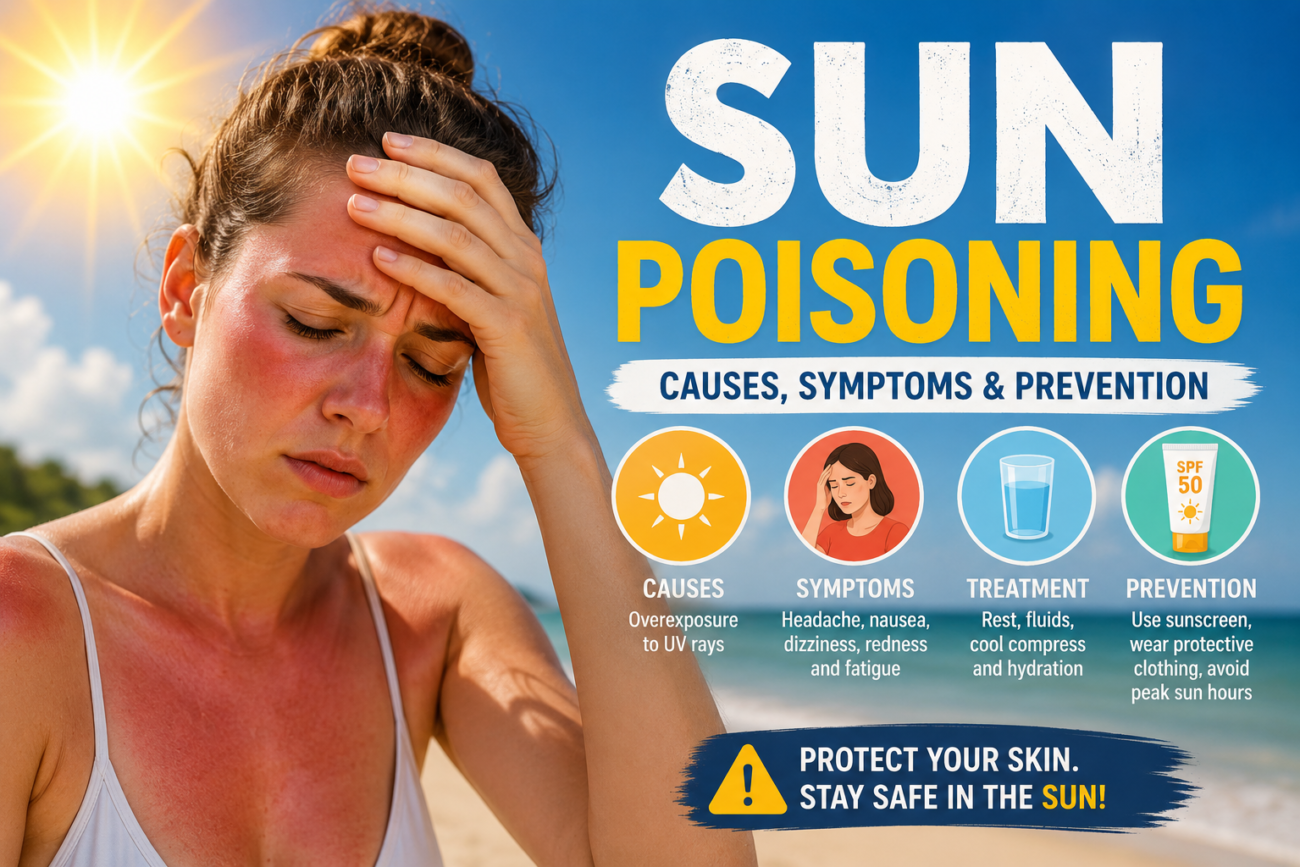
Sun poisoning is a commonly used term for a severe sun reaction, usually involving an intense sunburn and, in some cases, additional symptoms such as swelling, blistering, headache, nausea, fever, chills, or dizziness. Despite its name, sun poisoning does not mean that the sun has literally poisoned the body.
Most mild sunburns improve with home care, but a severe reaction can require medical attention. Knowing the difference between an ordinary sunburn and a more serious reaction can help you respond appropriately and reduce the risk of complications.
This guide explains what sun poisoning means, what causes it, the symptoms to watch for, how it is treated, when to seek medical care, and how to prevent severe sun damage.
Key Takeaways
- Sun poisoning is a common term for a severe sunburn or significant reaction to ultraviolet (UV) exposure.
- Symptoms can include intense redness, pain, swelling, blisters, headache, nausea, fever, chills, and dehydration.
- Treatment generally focuses on cooling the skin, replacing fluids, relieving discomfort, and protecting damaged skin.
- Severe symptoms, extensive blistering, confusion, fainting, dehydration, or signs of infection warrant prompt medical attention.
- Some medications and medical conditions can make the skin more sensitive to sunlight.
- Consistent sun protection is the best way to prevent severe sunburn and related reactions.
What Is Sun Poisoning?
The term sun poisoning is not a formal medical diagnosis. People commonly use it to describe a particularly severe sunburn or an intense reaction to UV radiation.
A typical sunburn causes red, painful, irritated skin after too much exposure to ultraviolet radiation. A more severe reaction may cause extensive redness, significant swelling, fluid-filled blisters, and systemic symptoms that affect how a person feels overall.
In some situations, people also use “sun poisoning” to describe a condition called polymorphous light eruption (PMLE), a type of sun-induced skin reaction. PMLE can cause itchy or bumpy rashes after sun exposure and is different from a conventional sunburn.
Because several conditions can produce symptoms after sun exposure, the exact cause matters when determining appropriate treatment.
How Does Sunburn Cause Symptoms?
Sunlight contains ultraviolet radiation, including UVA and UVB rays. Excessive UV exposure can damage skin cells and trigger inflammation.
This inflammatory response contributes to common sunburn symptoms such as:
- Redness
- Warmth
- Tenderness
- Pain
- Swelling
- Peeling
- Blistering in more severe burns
A severe sunburn can also contribute to fluid loss and dehydration, particularly when it affects a large area of skin.
Sun Poisoning Symptoms
Symptoms vary depending on the severity of the reaction, how much skin is affected, and whether another sun-related condition is involved.
Common Symptoms
Typical symptoms of significant sun exposure may include:
- Bright or deep red skin
- Skin that feels hot or tender
- Burning or stinging pain
- Swelling
- Dryness
- Skin sensitivity
- Peeling during recovery
Symptoms often become more noticeable several hours after excessive sun exposure rather than immediately.
More Severe Symptoms
A severe reaction may involve:
- Extensive blistering
- Severe pain
- Significant swelling
- Headache
- Nausea
- Vomiting
- Fever
- Chills
- Weakness
- Dizziness
- Dehydration
- Fainting
These symptoms can indicate that the problem is more than a minor sunburn and may require medical evaluation.
What Do Sun Poisoning Blisters Look Like?
Severe sunburn can produce fluid-filled blisters. They may appear on areas that received substantial UV exposure and can be painful or sensitive.
Do not deliberately break or peel blisters. The skin helps protect the underlying tissue from infection while it heals.
If a blister breaks accidentally, keep the area clean and avoid picking at the damaged skin.
What Causes Sun Poisoning?
The most common cause is excessive exposure to UV radiation without adequate protection.
Risk increases when someone:
- Spends a long time outdoors
- Does not use sunscreen appropriately
- Does not wear protective clothing
- Is outdoors during periods of strong UV radiation
- Fails to reapply sunscreen after swimming or sweating
- Is exposed to sunlight while taking a photosensitizing medication
Reflected sunlight can also increase UV exposure. Water, sand, and snow can reflect UV radiation toward the skin, potentially increasing exposure.
Factors That May Increase Risk
Certain factors can make severe sun reactions more likely.
Fair or Lightly Pigmented Skin
People with lighter skin generally have less natural melanin protection against UV radiation and may burn more easily.
However, people with darker skin can also experience sunburn and UV-related skin damage. Everyone benefits from appropriate sun protection.
Certain Medications
Some medications can increase sensitivity to sunlight. Depending on the medication, this can make a person more susceptible to sunburn or a photosensitivity reaction.
Examples can include certain antibiotics, diuretics, acne treatments, and other medicines.
If you are taking a medication and notice an unusual reaction after sun exposure, ask a healthcare professional or pharmacist whether the medicine can increase photosensitivity.
Previous Sun Damage
Repeated sun exposure and sunburn contribute to cumulative UV damage. A history of frequent sunburns is associated with increased long-term skin cancer risk.
Sun Poisoning vs. Sunburn
Sun poisoning and sunburn are not necessarily two completely separate conditions.
| Feature | Typical Sunburn | Severe Sun Reaction |
|---|---|---|
| Redness | Common | Often intense or widespread |
| Pain | Mild to moderate | Can be severe |
| Swelling | Possible | May be significant |
| Blisters | Possible in severe burns | More likely with extensive burns |
| Headache | Less typical | May occur |
| Nausea | Uncommon | May occur |
| Fever or chills | Less typical | Can occur |
| Dehydration | Possible | Greater concern |
| Medical evaluation | Often unnecessary | May be needed depending on symptoms |
The important point is that “sun poisoning” is an informal term. A healthcare professional can determine whether symptoms are due to severe sunburn, a photosensitivity reaction, heat-related illness, or another condition.
How to Treat Sun Poisoning
Treatment depends on the severity of the symptoms.
For a mild-to-moderate sunburn without concerning symptoms, supportive home care can help the skin recover.
1. Get Out of the Sun
Move indoors or into shade as soon as you notice significant burning or irritation.
Continuing to expose damaged skin to UV radiation can make the injury worse.
2. Cool the Skin
A cool bath or shower can help reduce discomfort. You can also apply a clean, cool, damp cloth to affected areas.
Avoid putting ice directly on sunburned skin because extreme cold can further injure already damaged tissue.
3. Drink Fluids
Sun exposure, heat, sweating, and damaged skin can contribute to fluid loss.
Drink water and other appropriate fluids to help maintain hydration. If you have persistent vomiting or cannot keep fluids down, seek medical advice.
4. Moisturize the Skin
A gentle moisturizer can help reduce dryness and discomfort.
Products containing aloe vera or soy may be soothing for some people. Avoid products that further irritate the skin.
5. Manage Pain Carefully
Over-the-counter pain relievers may help with discomfort and inflammation when they are safe for you to use.
Follow the product’s dosing instructions and consider your existing medical conditions, allergies, and other medications. When uncertain, ask a pharmacist or healthcare professional.
6. Leave Blisters Alone
Do not intentionally pop sunburn blisters. If they open, gently clean the area and protect it with an appropriate dressing.
Seek medical advice if the area becomes increasingly painful, warm, swollen, or produces pus, as these can be signs of infection.
7. Protect Healing Skin
Keep sunburned skin covered and avoid additional UV exposure while it heals.
Loose clothing made from comfortable fabric can reduce friction against irritated skin.
When Should You Seek Medical Care?
A severe sun reaction may require professional assessment.
Seek prompt medical attention if you experience symptoms such as:
- Severe or rapidly worsening pain
- Extensive blistering
- Severe swelling
- Fainting
- Confusion
- Significant weakness
- Persistent vomiting
- Difficulty staying hydrated
- Severe dizziness
- Signs of infection
- A severe reaction involving a large area of the body
Babies and young children with significant sunburn should be assessed by a healthcare professional because they can become dehydrated more quickly and may have difficulty communicating the severity of their symptoms.
If someone develops confusion, loss of consciousness, severe weakness, or other signs of a potentially serious heat-related illness after being in the sun, seek emergency medical help.
How Long Does Sun Poisoning Last?
The recovery time depends on the severity of the skin injury.
A mild sunburn may begin improving within several days. More severe burns can take considerably longer to heal, particularly when blistering occurs.
Peeling may happen several days after the exposure as damaged outer skin is shed. Avoid forcibly removing peeling skin.
During recovery, continued sun exposure can worsen irritation and delay healing.
Can You Prevent Sun Poisoning?
Yes. The most effective strategy is to reduce excessive UV exposure.
Use Broad-Spectrum Sunscreen
Choose a broad-spectrum sunscreen that protects against UVA and UVB radiation. Apply it generously to exposed skin and reapply as directed, especially after swimming, sweating, or towel drying.
Sunscreen works best as part of a broader sun-protection strategy rather than as the only defense.
Wear Protective Clothing
Long sleeves, trousers, wide-brimmed hats, and UV-protective clothing can reduce direct UV exposure.
Sunglasses that provide appropriate UV protection can also help protect the eyes and surrounding areas.
Seek Shade
Whenever possible, spend time in shaded areas, particularly when UV exposure is strong.
Remember that shade does not completely eliminate UV exposure, especially near reflective surfaces.
Avoid Intentional Tanning
Indoor tanning devices and deliberate tanning increase UV exposure and can contribute to skin damage.
A tan is a response to UV exposure rather than a sign that the skin has become healthier.
Sun Poisoning and Photosensitivity
Not every rash that appears after sunlight is a severe sunburn.
Photosensitivity occurs when the skin reacts unusually to UV radiation. Certain medications, skincare products, and medical conditions can contribute to photosensitivity.
A photosensitivity reaction may look different from a traditional sunburn. It can involve redness, itching, bumps, or other skin changes.
If you repeatedly develop an unusual rash after relatively limited sun exposure, discuss it with a healthcare professional rather than assuming it is ordinary sunburn.
Common Mistakes to Avoid
Several common approaches can make irritated skin feel worse or delay recovery.
Do Not Put Ice Directly on Burned Skin
Very cold temperatures can damage already injured tissue. Use cool rather than freezing temperatures.
Do Not Pop Blisters
Intact blisters provide a natural protective barrier. Breaking them unnecessarily can increase the risk of infection.
Do Not Continue Sun Exposure
A severe sunburn is not a reason to “push through” more outdoor exposure. Protect the affected skin until it has recovered.
Do Not Ignore Systemic Symptoms
Headache, nausea, vomiting, dizziness, fainting, fever, or confusion can indicate a more serious problem. These symptoms deserve appropriate medical attention, particularly when severe or worsening.
Frequently Asked Questions
Is sun poisoning actually poisoning?
No. “Sun poisoning” is an informal term, not literal poisoning. It is commonly used to describe a severe sunburn or significant reaction to UV exposure.
How do you know if you have sun poisoning?
Severe redness, pain, swelling, blistering, and symptoms such as headache, nausea, dizziness, fever, or chills may indicate a severe reaction. A healthcare professional can determine the underlying cause.
Can sun poisoning go away on its own?
Mild cases of severe sunburn can often improve with supportive care, but serious symptoms should not be ignored. Extensive blistering, severe pain, dehydration, fainting, confusion, or persistent vomiting may require medical care.
Should you pop sun poisoning blisters?
No. Avoid intentionally popping blisters. If a blister breaks, keep the area clean and protected, and seek medical advice if signs of infection develop.
How long does sun poisoning take to heal?
Recovery varies according to severity. Mild sunburn generally improves over several days, while severe blistering burns can take substantially longer.
Can you get sun poisoning through a window?
Glass blocks most UVB radiation, but some UVA can pass through certain types of glass. Prolonged sunlight through windows can therefore still contribute to cumulative UV exposure.
Does sunscreen prevent sun poisoning?
Proper sunscreen use can reduce UV exposure and the risk of sunburn, but it should be combined with shade, protective clothing, hats, and sensible limits on sun exposure.
Conclusion
Sun poisoning is a commonly used term for a severe sun-related skin reaction, most often an intense sunburn. Recognizing symptoms such as extensive redness, severe pain, blistering, swelling, dizziness, nausea, or dehydration can help you determine when additional care may be necessary.
For less severe sunburn, moving out of the sun, cooling the skin, staying hydrated, using gentle moisturizers, and protecting the affected area can support recovery. More serious symptoms require medical assessment, particularly when there is extensive blistering, persistent vomiting, fainting, confusion, severe dehydration, or evidence of infection.
The best treatment is prevention. Broad-spectrum sunscreen, protective clothing, shade, and sensible sun exposure can significantly reduce the risk of severe sun damage and help keep your skin healthier over time.
